iPhonelinux Wishlist

Planetbeing's words from the iphonelinux github:
"This is just my personal WISHLIST. You might have different priorities. If you want to help, just submit patches that you think are helpful. If you need ideas, just refer to this list. Take it off the list in your patch when you finish something off the list. I'll try to give as much help and guidance as I have time to (which may not be much). 
This is not an exhaustive list, but just stuff I think people can actually deliver on reasonable timescales. For example, notice the conspicuous absence of "figure out how to make phone calls". It's roughly divided based on skillset.  
Jobs for C coders that may not have much RE or driver experience:  
1. Simplify driver code: An early goal of this project is to remain faithful to how the iPhone firmware operates the hardware. Some of it does not actually make sense or is otherwise not very efficient. We have a better understanding of the hardware now and can afford to write better drivers with that understanding. This is essentially refactoring.  
2. Refactor openiboot: I'm not sure I like the way openiboot is laid out right now. There's got to be a neater way to organize this. I'd like something that has less messy defines and a more consistent style so it's easier to read, perhaps individual folders for each module, and the ability to easily include or not include any individual module. An emphasis should be put on ease of porting. 
3. Add multitasking: A great project for students in or just out of OS classes. I've been too lazy to add true multithreading primitives: mutexes, semaphores, condition variables, and also multitasking in general. A lot of stuff is run in interrupt contexes or interrupt-disabled contexes. Writing drivers requiring blocking I/O is a pain. It's time for a true multitasking kernel. Should be done in coordination with #2.  
4. Write a gdb stub for openiboot: Those things are tiny and it shouldn't be that bad. Just have it communicate over the existing USB driver now. We wouldn't be able to debug interrupt contexts for now, but it's better than nothing.  
5. Someone needs to MAINTAIN the build script for the toolchain. Or else figure out if/how we can just build everything using Apple's or the community's iPhone OS toolchain. I'm pretty sure we can. It's not like we use the elf wrapper currently.  
6. It might be cool to be able to parse the iPhone's own device tree for some of base addresses. Might make porting less of a pain.  
7. With help from CPICH, we've determined the vibrator and speaker controls are in the baseband, both controlled through the at+xdrv command. Knowing this, the next step is to make sure we can talk to the baseband through the UARTs. This shouldn't be that bad since iBoot used to do it, and we already have UART code.  
8. I've implemented the firmware upload part of Libertas WLAN driver for Marvell 8686 to test out the SDIO functionality. It appears to work. Therefore, we have validated readb, writeb and writesb. More of it should be implemented to validate SDIO device interrupt handling and also readsb. After that, we will definitely have enough to support working wi-fi in the Linux kernel!  
Jobs for people who want to get their hands dirty with drivers:  
1. Look at TheSeven's NAND FTL code in Rockbox and CPICH's reverse engineering efforts to figure out the FTL write code and get it working.  
2. Write a new USB driver: I hate the current one. TheSeven might have some better code.  
3. Can we steal some code from that userland bluetooth stack and put it on top of our UART code? It might be even cleaner than USB, ironically, since we can probably do it all without interrupts.  
Jobs for reverse engineers:  
1. Port openiboot to unsupported platforms like ipt2g, ipt3g and iPhone 3GS.  
 2. For some reason, the NAND chips stop working after the iPhone is on for a long time. They're fine after a reboot. Figure out why that's happening.  
3. Get multitouch working for Zephyr2. It's a subclass of the Zephyr1 that I investigated, and at least some functions are shared, so it shouldn't be terrible.  
4. Figure out how to talk to the light sensor. It's a TSL2561 according to the ioreg. The slave address is 0x92/0x93 according to the ioreg "reg" setting and is one of the slave addresses allowed on the TSL2561. It's on i2c0 according to ioreg. It all looks good except for the fact I cannot get a response out of this part. I even bruteforced all the slave addresses on i2c0 and only got responses from the PMU, the accelerometer and the Wolfson, stuff we already know how to talk to. What's going on? Is it just my 2G is broken?  
5. Figure out the new FTL they're using on the newer devices. That's going to be a pain.  
Thanks for reading all this. I'm impressed."
Android at the Game Developer's Conference

Tuesday, March 9 marks the start of the 2010 Game Developers Conference in San Francisco, and Android will be there! There has been a lot of interest about Android from the game development community, and our presence at GDC is intended to provide developers everything they need to get started with the platform. We are hosting several technical sessions and participating in two industry panels.

We also want to meet you and answer your questions about Android game development, so we've set aside time for "office hours." Android team engineers will be on-hand to answer your questions, and if you have a game in development for Android, we'd love to see a demo.

Below, you can see the technical sessions that we're hosting and industry panels that we're participating in. We look forward to seeing you at GDC2010!

Technical sessions

Tuesday, March 9

Bootstrapping Games on Android
Chris Pruett
Everything you need to know about games on Android in 60 minutes.
1:45 PM - 2:45 PM
Room 309, South Hall

Wednesday, March 10

Bring Your Games to Android
Jack Palevich
An in-depth look at writing and porting C++ games using the NDK and a thin Java shell.
10:30 AM - 11:30 AM
Room 302, South Hall

Get the Most out of Android Media APIs
Dave Sparks & Jason Sams
Tips and tricks for optimizing your sound, video, and graphics for compatibility, efficiency, and battery life.
11:45 AM - 12:45 PM
Room 302, South Hall

Android Office Hours
The Android team
Come meet the team, ask us your questions, and show off your games!
3:00 PM - 4:00 PM
Room 302, South Hall

Industry panels

Wednesday, March 10

GamesBeat2010: A sea of mobile devices
Eric Chu
Industry experts weigh in on the future of mobile game development.
4:30 PM - 5:30 PM
Moscone Convention Center

Thursday, March 11

After the iPhone...what?
Dave Sparks
Audio experts discuss the nitty gritty technical details of alternative gaming platforms.
10:30 AM - 11:30 AM
Room 112, North Hall

New T-Mobile G1 update rolling out this week

T-Mobile USA have confirmed that the Android 1.6 OS update is now being pushed out to owners of G1 and myTouch 3G handsets. According to the shot, starting on February 26th a new Android 1.6 (DMD64) update began its rollout. The release will continue through March 15th, when T-Mobile hopes to be done with this one.Details of the update include:*This software update improves customers’ call

Nokia X6 16GB Now Available at Vodafone UK

Vodafone UK has announced the availability of the new Nokia X6 on its network. The Vodafone’s Nokia X6 16GB phone is pre-loaded with Vodafone 360 Homescreen and the British comedy show Gavin & Stacey of third series. Moreover, The Vodafone’s Nokia X6 16GB phone provides the 360 Apps and Games Shop, Vodafone My Web, Vodafone Music, VIP contacts, and downloads DRM-free songs.The X6 16GB also

Mister Cartoon colors the Motorola VE440

MetroPCS has released the Motorola VE440 Mister Cartoon edition, which is actually a remake of the previously released VE440. Available this week in select stores and online, the limited edition handset features artwork and pre-loaded digital content designed by legendary tattoo and graphic artist Mister Cartoon, along with two exclusive tracks from legendary hip hop personality, Snoop Dogg.The

Nokia C5 Now Available

Nokia today unveiled the Nokia C5, a smartphone optimized for social networking and sharing. The compact device includes access to Nokia’s range of mobile services, such as free navigation, in one affordable package, with an estimated retail price of EUR 135, before taxes and subsidies.With direct access to favorite contacts on the device homescreen and Facebook status updates visible from the

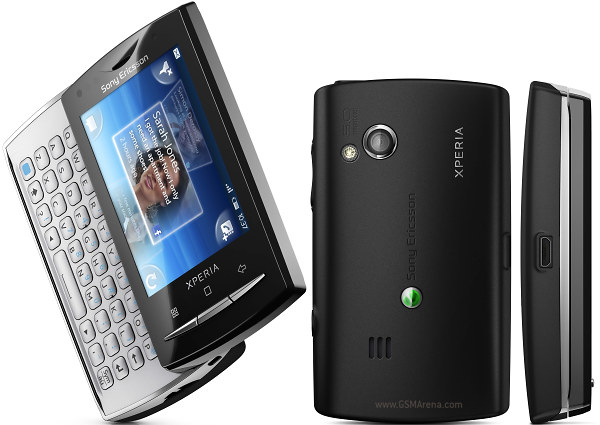
Sony Ericsson XPERIA X10 mini version new phone

Launching mini phones after the first phones is a new trend of mobile phone industry. there are lots of examples for this like Nokia N97 mini. Sony Ericsson has also derided to launch a mini version of their famous phone Sony Ericsson XPERIA X10.
but this phone is little bit differ from Sony Ericsson XPERIA X10 and it runs Android OS. XPERIA X10 mini has a 2.55 inch capacitive touchscreen. it has a new user interface called Timescape UI.
this phone has 128MB internal memory and has bluetooth and wi-fi. it supports 7.2MBP/s 3G HSDPA. also XPERIA X10 mini has a 5MP main camera. it comes with a LED flash and supports geo-tagging feature. also XPERIA X10 mini allows 30fps high quality video recording. it also has a GPS and a FM radio.