Showing posts with label Apple. Show all posts

iOS, Android and Windows Phone 7: the facts and my experience [Part 1]

Q4 2010 brought a big milestone to the mobile industry: smartphones outsold PCs for the first time ever. And that's not even taking into account tables and iPods that provide similar functionality. In short, mobile devices - or "post-PC devices", as Steve Jobs calls them - are hot stuff right now.


However, it's easy to get lost and confused by all the devices and even by all the mobile operating systems we can choose from. Apple is certainly leading this new revolution with the iPhone and the iPad, but other software and hardware companies are trying their best to catch up and capture our imagination.

Last Summer I started blogging at Mobitel Tehnik, a blog about mobile technologies, on which my posts (in Slovenian) mainly cover news and tips related to mobile app development. As part of my assignment, I've been using and following the development of some of the recently most popular smart mobile operating systems on the market.

That is why I've decided to sum up some of the thoughts and experiences I've had with various platforms on my blog in two parts: in the first part, I focus on introducing facts and my personal experience with 3 of the most talked about smartphone operating systems: Apple's iOS, Google's Android, and Microsoft's Windows Phone 7. And in part 2, I will try to imagine the potential of using iOS, Android and WP7 mobile devices in classrooms.

Ok, so let's take a look at the facts and my personal experience with each of the three platforms first.

iOS: It's all about beautiful apps


Basic facts: Apple's mobile operating system that runs on iPhones, iPod Touches, iPad and Apple TV - all Apple devices. Launched in June 2007, current version 4.2. Got its application store, the App Store (tied with the iTunes Store), in July 2008 and now features over 350,000 apps.

The experience: Unfortunately, iPhone isn't officially sold in my country (the only blank spot in Europe!), so I've been using iOS on my 2nd generation iPod Touch. Truth be told, I don't really use it as an iPod that much - my primary iPod used mainly for running is the new iPod Nano. The iPod Touch is, however, my mobile device of choice for browsing and apps. I use it to play various casual games like Bejeweled Blitz, Fruit Ninja and Tiny Wings (my current favorites), manage my shopping list with ShopShop, plan my runs with Runner's World SmartCoach app, rate my favorite Movies, and much more.


And I'm just in love with iOS apps! The App Store provides great choice of both free and paid apps, and it's really easy to discover beautiful new apps. It's the kind of store where you buy a $2.99 weather app just because it's sooo pretty.

The magic behind the App Store lies in detailed guidelines and excellent developer tools that make it easy to have good looking apps even if you use just the default UI elements provided by Apple. Yes, a lot of people complain about the strict App Store approval process, but from the user perspective, it pays off to have a store full of quality and well tested apps.

Android: It's all about opportunities and promises


Basic facts: Usually thought as the biggest iOS competitor, developed by Google and other members of the Open Handset Alliance. Launched in October 2008, current version 2.3 Gingerbread, although the majority of users currently still runs version 2.2 Froyo. Android runs on all sorts of smartphone and tablets devices in various price ranges. The devices are made by different manufacturers, which also provide their unique user interfaces (such as HTC Sense, Samsung's TouchWiz etc). The Android application store, Android Market, launched in October 2008 and now features over 250,000 apps.

The experience: Ah, dear Android. The joy and love of the tech crowd. The supposedly "open alternative" to Apple's evil walled-garden. And, more often than not, quite irritating to use.

I've used Android on several HTC devices (Desire, Legend, Wildfire) and the overall look and feel is quite good. The hardware was good, but what annoyed me to no end, was the need to constantly fiddle with settings and other details of the software. And the regular need to reboot, which reminded me of what it was like to own a PC.

All in all, it was usually nothing huge per se, but there was always that tiny little detail that required your attention and sometimes got your head scratching. Like the mystery of why apps that I had never used (e.g. Stocks, Music, News) were always running in the background.

Speaking of apps. Sure, in theory it does sound wonderful that Google lets almost anyone publish apps on the Android Market. But in practice? The Market is flooded with poorly designed apps. And as Android Market works with Google Checkout, which is not supported in my country, I was stuck on using free apps only.

Then, the games... just not comparable to iOS games. And sure, the gaming aspect is supposed to be improved with the next big release - and that is basically what we keep hearing all the time. "The next Android update will kick iPhone's ass!" Anyone else got tired of waiting for the savior?


Ok, I've got to be fair - Android does have a few strong points as well. I loved the integration with Google services, particularly Google Maps. And the WiFi Hotspot app (for tethering), introduced with the Froyo update, was awesome. And oh, I really liked HTC's weather widget on the home screen!

Wondering why I've been using the past tense here? Ah, that's because I've been using Windows Phone 7 as my primary phone OS for a couple of weeks now, and I honestly don't miss Android all that much.

Windows Phone 7: It's all about the simple experience


Basic facts: The new kid on the block, even though it's the successor of the ye olde Windows Mobile platform. Microsoft decided to get a fresh start with Windows Phone 7 and introduced a radically different user interface and no backwards compatibility with previous versions of Windows Mobile. WP7 launched in October 2010 and has yet to receive a major update (expected to be released soon-ish). Like Android, WP7 runs on devices by different manufacturers, but Microsoft sets the hardware requirements for WP7 phones and doesn't allow major modifications of the user interface, so all WP7 phones have a consistent look and feel (unlike Android phones). Its applications store, the Windows Phone Marketplace, launched with the release of the first phones in October 2010 and now features over 8,000 apps.

The experience: This may come as a surprise to those of you that know how much I love using a Mac - I actually enjoy the Windows Phone 7 experience. Yes, me, enjoying a Windows product! Shocking, I know.

But I think Microsoft did the smart thing by dropping the outdated Windows Mobile legacy platform and focused on a fresh, unique mobile experience. It's a mobile OS that tries to help users do what they're supposed to be doing without getting in the way.

Coming from Android, the contrast can be quite stark at first. But after a while, you just sit back and enjoy the ride. No need to worry about turning the GPS on and off manually. If an app, such as Maps, needs it, it will turn it on and then off again when you're done.

The home screen with live tiles makes it easy to see important information on the go, and the OS uses hubs to bundle key content and media together. For instance, the People hub brings together your contacts and their Facebook updates in an attractive panorama view. Plus, it can also sync music, photos and videos with your computer and there's even a Windows Phone 7 Connector for Mac OS X that can sync content from iTunes.


However, it must be noted that WP7 is still a version 1.0 OS, so there are "a few" bugs and oddities that will have to be sorted out. Similarly, the Marketplace is still only a few months old, so the selection of apps isn't that great. For instance, there is no Dropbox or Evernote app, and I miss more apps from Google, particularly Google Maps - WP7, not surprisingly, has Bing Maps integrated and the app just doesn't work as well as Google's.

And just like the Android Market, the Windows Phone Marketplace doesn't allow purchases from my country, so I can't really enjoy any of the cool game titles already available in the application store. You do however get the option to Try out a lot of the paid apps and games, which is a really cool feature.

And the winner is...

One thing is for sure - while similar on paper, iOS, Android and Windows Phone 7 provide quite a different user experience. Which one is best? Well, it really depends on what you're looking for.

iOS is certainly a more solid platform with an amazing selection of apps, which isn't surprising considering it was the first to launch. Android is perfect for geeks that enjoy fiddling with their devices. And WP7 is cute, but needs to grow up a bit more and get more developers interested in making good apps.


For me, iOS is certainly the first choice. It's simple, yet mature enough to provide all the extra goodies (such as tethering). WP7 is also an OS that I could see my grandpa using, as he probably wouldn't miss any of the yet missing apps. And Android is a solid choice for everyone that is bothered by Apple's "closed" system and is looking for variety in hardware, but not something I'd recommend for the average user.

What does it all mean?

So, we have at least three platforms that will be running smartphones and tablets of our future. And we keep hearing the future will be mobile, which also means we can expect the big mobile operating systems to find their way into our classrooms and be used as teaching tools. I therefore invite you to join me in part 2 in a few days to explore which of the 3 platforms might have the biggest potential for learning.

Nokia: An Excess of Cleverness

I'm looking forward eagerly to Nokia's strategy announcement this week.  Although Nokia is not highly esteemed in the US, most of the rest of the world recognizes it as an enormously important company: a brilliant manufacturer, a symbol of status and affluence in the developing world, and a source of great pride to its many fans in Europe and elsewhere.  If Nokia could combine its strengths with better execution in software and smartphones, it could be a formidable force in the computing industry as a whole, not just in mobile.

In anticipation of the new strategy, I wanted to share a few thoughts on why Nokia has struggled with the intersection of phones and computing, and what it might do to fix the problems. 

A couple of disclosures first:
--Several years ago I did a consulting project for Nokia.  I've also met with them, I have had a lot of briefings from them, and I know several people who work there.  No inside information from any of those sources has gone into this note.
--Before someone posts a comment saying so, yes my views are colored by the place I live, Silicon Valley.  Your paradigm may vary.

As is often the case for big successful companies, I think Nokia's strengths are also its weaknesses:


Strength 1: Nokia focuses very well...which can lead to denial of reality 

Nokia has a very intense, delivery-focused culture that has enabled it to pursue strategies with awesome focus and determination.  Over the years, the company has transformed itself from a paper mill to a rubber boots company to a video monitor company, etc, etc.  I can think of very few modern firms that are capable of that sort of huge transformation.

But I think that same determination has also sometimes enabled Nokia to live in denial of reality.  As an outsider who has dealt with Nokia a lot over the years, the company often comes across to me as the opposite of a learning organization.  Rather than getting inquiry and questions, when you discuss an issue with Nokia you tend to find that there is already an official Nokia answer to it: self-assured, hermetically sealed, and often sounding slightly condescending.

When Nokia was on a roll and executing beautifully, that self-assurance was entirely justified.  As somebody once said, "it's not arrogance if you can do it."  But as the company faltered, I think its belief in its own specialness and power led it to resist making changes that would have happened at most other companies several years ago.  This deepened Nokia's problems.

A quick look at the company's financials tells the story.  In 2006, Nokia was on a roll.  Its revenue was growing nicely, and it had operating profits of about 12% before taxes.  But starting in 2007, Nokia hit a wall.  Its revenue flattened and then fell.  Despite the revenue problem, Nokia held its R&D, marketing, and administrative spending almost steady in Euro terms, increasing them as a percent of revenue.  It's as if Nokia believed four years of revenue stagnation were just a temporary glitch to be endured rather than a fundamental problem that had to be fixed.


(Note: Fiscal years, all figures in $millions.  The numbers above and below were restated from euros to dollars.  I also excluded miscellaneous revenue and expenses, and one-time charges, because they distort the trends.)

To give you an idea of the impact of Nokia's slowdown, here are a couple of comparisons to Apple.


First, revenue...


Yes, Apple is now a bigger company than Nokia in terms of revenue.  That alone is pretty astonishing to me, and I'm sure it irritates the folks at Nokia, since they routinely bristle at this sort of comparison (link).


Here are expenses (R&D, marketing, and administration) as a percent of revenue.  Lower is better.


Apple has done a nice job of holding its expense growth below its revenue growth.


And here's the payoff:  Operating income


Financially, Apple has just plain run away from Nokia.


When Stephen Elop was announced as CEO of Nokia, people made a lot of hay about his background as a Canadian.  I think that was the wrong bit to focus on.  To me, the most important element of Elop's background was the ten years he spent in Silicon Valley.  I wondered what a Silicon Valley guy would think when coming into a company and seeing financials like these.  I believe the reaction would be horror: "Why didn't you people panic back in 2008?"  The accepted wisdom here is that you just don't let expenses stay high through four years of declining revenue.  That lets the problems fester.  Nokia is now a bit like a patient who has delayed routine medical treatment for so long that he ends up in the emergency room needing surgery.

Elop's now-famous memo on Nokia's problems speaks volumes about the company's culture (link).  Assuming the memo is real (I am taking the word of the press on this), Elop likens Nokia's situation to jumping from a burning oil derrick into the North Sea -- where, as anyone in the Nordic countries would know, you can die of hypothermia in minutes. 

What does it say about the employees' resistance to change that the CEO feels he has to be this alarming? 


Strength 2: Nokia manufactures wonderfully...which produces sterile, inartistic smartphones

Nokia is one of the most efficient manufacturing companies on the planet.  Very few western companies have ever withstood an all-out assault by China Inc, but Nokia, a company from high-cost Finland, has also been for years the world's lowest-cost major producer of phones.  Elop's memo says that cost leadership is now under threat, but still it's an unbelievable accomplishment that ought to be studied in every business school worldwide. 

But the same manufacturing-driven culture that turns out great, cheap feature phones by the dozen breaks down when asked to craft an intricate smartphone in which overall system integration is the most important feature.  Nokia designs phones using a manufacturing-like process in which different groups create features in parallel.  So (to make up an example) one group might do the user interface, another the mail app, and another the browser.  That's very efficient for creating lots of phones quickly, but it means it's very difficult to integrate all of the pieces together closely so they produce a great user experience.  The best smartphones, like the iPhone, are designed holistically, with all of the pieces coordinated together.  A product manager controls the process and can enforce compliance with the product vision.  This process is much slower and less efficient than Nokia's, but when you're creating a product with a lot of software, it ensures that everything works together well.

Apple can get away with this less efficient process because it produces one phone at a time.  Nokia has 89 different phone models available currently in Europe (link).


Strength 3: Nokia makes fantastic plans...over and over and over again

Nokia has for decades been able to hire the brightest people from a very bright country, Finland.  After meeting a lot of Nokia employees, I can tell you that it probably has one of the smartest workforces anywhere.  But all that intelligence has produced an analytical culture that breeds complicated plans elaborately fleshed out by committees.  Its history in the last decade is a series of wickedly clever, logical strategies that were so complex and took so long to develop and implement that they were often obsolete before they came to fruition.  It sometimes seems as if Nokia has been crippled by an excess of cleverness.

I'm reminded of a short story by science fiction legend Arthur C. Clarke, Superiority.  In it he described a society that lost a war by continually focusing on the new weapons that were about to come out of the labs, rather than mass-producing the ones that it already knew how to build.

To make matters more difficult, Nokia defined almost every major company in computing and telecommunications as its enemy.  At one time or another it has decided that it needed to dominate or defeat Microsoft, Apple, RIM, Google, the entire handset industry, the network equipment suppliers, and of course the mobile operators.  Even the US government tries to fight only two wars at once; Nokia has been fighting at least five.

There are so many examples of Nokia's busted plans that I don't know where to start.  The Symbian adventure, in all of its permutations, is an obvious one.  Nokia has gone through a number of different organizational structures, each of which was supposed to optimize it to compete in the new world of computing and internet.  But the one that sticks out at the moment is Nokia's venture in tablet computing.

Don't get me wrong, I do know the differences between an iPad and an n900.  They are dramatically different devices that reflect profoundly different design philosophies.  But both were designed for a similar high-level goal -- to make computing and web access mobile.  Nokia shipped its product first, more than three years ago.  Apple shipped last year.  Apple is selling seven million units a quarter, while n900 sales are what, a few hundred thousand?  Nice, but not a new industry.  I know Nokia has learned a lot, and has built a lot of infrastructure, but at some point you have to generate revenue rather than just having a great learning experience.


What do you do, Mr. Elop?

I think the biggest challenge facing Stephen Elop is that he needs to preserve the strengths of Nokia even as he undoes their effects.  Expenses have to come down, but at the same time he needs to invest in innovation.  The company must keep its manufacturing strength, even as it adopts a design philosophy that undercuts manufacturing efficiency.  People at Nokia have to be free to innovate independently, but when left to itself the Nokia culture tends to seek consensus and compromise.

I suspect that given all these changes, even motivating the Nokia workforce may become a challenge.  The Nokia people I've talked to love the company and desperately want it to get better.  But nobody could live through the last few years without getting a bit burned out.  Now the CEO says your home is on fire and you need to jump into freezing water.  Would that memo motivate you to work harder, or would it motivate you to work on your resume?  I was discussing the memo with several of my old friends from Apple today, and one of them joked that the message to employees was, "Everybody come to the communication meeting Friday!  Oh, and you might want to pack up your personal belongings and bring them, just in case."  On Friday, Nokia's people will need to see a carrot -- an attractive, plausible vision for the future of the company -- rather than just a stick.

I'll be watching carefully for that vision.  We're hearing rumors that Nokia is planning to shift away from its current operating systems and build on top of Windows Phone 7.  I doubt that's the full story.  For one thing, Nokia can't completely cut off its current software and switch to something else; there would have to be a long transition.  Besides, in the Nokia earnings call last month, Elop dropped some hints about his plans.  He talked about maintaining two platforms, one aimed at the mass market and another at the high end.  He said Nokia's biggest challenge is at the high end, so that's where I would expect a change is most likely.  Elop also went out of his way to praise the QT software layer, so I would be very surprised if it's killed.  If Windows Phone is in Nokia's future, I think we'd see it at the high end, paired with QT.  So we'd get a hybrid OS with Microsoft's plumbing and Nokia APIs. 
   
That would be a bold move, but it's also extremely complicated.  I remember when Palm tried to build its future on Windows Mobile, and gave up in disgust a couple of years later when Microsoft licensed Palm's innovations to other phone companies.  How would Nokia restrain Microsoft from doing the same thing again?  Elop worked at Microsoft, so I'm sure he has some ideas. 
   
Overall, it sounds like a high risk strategy, almost wickedly clever.  Exciting stuff.  And yet I keep remembering how Nokia's other wickedly clever strategies have worked out.

Note:  I've added more commentary on the Nokia announcement here.

Apple iPad 64GB 3G unboxing pics

Apple iPad 64 GB 3G unboxing pics.


Mobile single-tasking leads the way to a more human friendly desktop


The web seems like somethings everyone should know how to use by now. But what about the less experienced aka the majority of users? Do they really know how to use their browsers? And understand what's going on on their computer screens?

I think computers are still mysterious, magic boxes for a lot of people outside the tech savvy crowd, and we need to keep looking for solutions that can change that perception. Perhaps by learning from simple, easy to use, user centered mobile devices, like the iPad.


The web is a strange place for the average user

As a reader (or occasional visitor) of this blog, you probably have a good basic understanding of how the web works. You're probably familiar with the concept of a web browser and how your browser interacts with web servers to display different web locations. You know how to copy, type and check the URL of a website to make sure you've opened the right web page, and you're probably reading this page in one of the many tabs open in your browser, perhaps even an RSS reader.

But all of the above isn't such an easy task for everyone. If you think the web is easy to use, I challenge you to observe the way so-called "average users" interact with it. Users, who have never received any real training, and are not really interested in understanding how the whole system works. They just want to check their e-mail, share photos on Facebook or find a store's phone number on the web.

I have seem that many times in the past few months (while trying to teach them how to use a pretty complex online tool), and I must say it has changes my perspective. The web just seems like a different place for the average user than it is to me or probably you. It's a place where the Google search box is your starting point because you don't know the URL of your school's website, it's a place where you only use one window at a time (tabs? what tabs?), it's a place full of confusion and notifications you don't really understand. Update? Pop-ups? RSS? Java script? Is that even English?

Humorous Pictures

It's just so different from the world we, the tech crowd, live in. It's not a world where the lack of multitasking before iOS 4 was a problem, it's a world where no multitasking is a great feature.

Why do you make me switch windows and apps?

It's certainly something that we should all keep in mind when designing user interfaces and user experiences on the web. You think your registration process, which requires e-mail confirmation, is simple? Think again. The average user doesn't want to switch windows and apps, and doesn't want to read your friendly instructions about activation and other nonsense. They just want to get things done.

Photo: Microsoft.com
And that is where we can learn a lot from the new generation of smartphone operating systems (thinking mainly about iOS and Windows Phone 7, I'll leave my Android rant for another post). They make it easier for people to understand what they'll get and where to get it. With big, easy to tap icons, and a simple, physical Home button that always gets you back to the starting line. No complicated lists of programs, no need to decide where to save your files... In many ways, the mobile OS is smarter than your desktop OS, even though the "smartness" is a result of the limits such small devices have.

Let the OS do the work and just enjoy the ride

Many of the features that make current smartphones so pleasant to use, were first introduced by Apple. Of course, a lot of skeptics laughed at the lack of multitasking, physical keyboard and what not, but 4 years after the original iPhone came out, everyone is trying to make a better iPhone. Not a better smartphone per se, but a better iPhone. And even though the geeks love Android for being a more open platform, iPhone keeps setting the standard for the high-end smartphone market.

And I think Apple is actually on the right track again with the concept of Mac OS X Lion, the next major upgrade to their desktop OS due to be released this summer. Lion will take a bold step at bringing features from the mobile world - the magic of iPad, as they call it - to the desktop. A unified place to download, buy and update your applications, a launchpad with big, colorful icons, and full-screen apps that take away all the distractions of your desktop.

Photo: Apple.com
I can see all this being a big hit with the average users (time to switch grandpa to Mac OS X!). An app for Facebook, an app for your e-mail, an app for your workspace (which lives in the cloud, but you don't really know or care about it), and an app for Google, so you can find everything else. And you don't have to worry about whether apps are closed or open and about saving your work. You want to do something else? Fine, hit the "Home button" and come back to the first app when you're done, picking it up just where you left it.

Mobile devices are changing our expectations

While the emphasis in the discussions about the mobile revolution often seems to be on portability and the business opportunities of mobile apps, let's not forget about how all these mobile devices are changing the way people interact with computers and their expectations.

We are already seeing examples of how the iPad and similar devices are influencing web design, and I definitely think that's a positive trend that will make more and more web destinations feel more natural and uncluttered. Now is the right time to take a look at the web sites we build and maintain, and figure out how to make it more mobile and consequently human friendly.

And the end result will not be something just the less tech savvy users will enjoy; I think we can all benefit from less clutter and distractions. After all, it makes much more sense to have interfaces that adapt to the way people think, than to have people adapt to interfaces they have to use.

Additional readings:

Nokia files patent infringement complaints against Apple in the UK, Germany and the Netherlands

Nokia announced it has filed claims in the UK High Court, Dusseldorf and Mannheim District Courts in Germany and the District Court of the Hague, Netherlands, alleging that Apple infringes Nokia patents in many of its products sold in these countries, including iPhone, iPad and iPod Touch.

"These actions add 13 further Nokia patents to the 24 already asserted against Apple in the US International Trade Commission and the Delaware and Wisconsin Federal courts," said Paul Melin, vice president, Intellectual Property at Nokia. "The Nokia inventions protected by these patents include several which enable compelling user experiences. For example, using a wiping gesture on a touch screen to navigate content, or enabling access to constantly changing services with an on-device app store, both filed more than ten years before the launch of the iPhone."

Nokia's filing in the UK covers 4 Nokia patents related to touch user interface, on-device app stores, signal noise suppression and modulator structures.

Nokia's filing in Dusseldorf, Germany covers 7 Nokia patents related to touch user interface, antenna structures, messaging functionality and chipsets.

Nokia's filing in Mannheim, Germany covers 5 Nokia patents related to on-device app stores, caller ID, display illumination and the integration of multiple radios.

Nokia's filing in the Hague, Netherlands covers 2 Nokia patents related to signal noise suppression and data card functionality.

None of the asserted patents have been declared essential to any wireless communication standard.

During the last two decades, Nokia has invested approximately EUR 40 billion in research and development and built one of the wireless industry's strongest and broadest IPR portfolios, with around 11,000 patent families. Nokia is a world leader in the development of handheld device and mobile communications technologies, which is also demonstrated by Nokia's strong patent position.
About Nokia

At Nokia, we are committed to connecting people. We combine advanced technology with personalized services that enable people to stay close to what matters to them. Every day, more than 1.3 billion people connect to one another with a Nokia device - from mobile phones to advanced smartphones and high-performance mobile computers. Today, Nokia is integrating its devices with innovative services through Ovi (www.ovi.com), including music, maps, apps, email and more. Nokia's NAVTEQ is a leader in comprehensive digital mapping and navigation services, while Nokia Siemens Networks provides equipment, services and solutions for communications networks globally.

Verizon iPhone 4: What does it really mean?

The hype is all over the place, the Verizon iPhone 4 is really happening.  (Yawn!)

What does this mean:
* After all the years of speculation and waiting, Verizon finally gets the iPhone 4 which is 6 months old (this is a long time in Mobile years)
* iPhone 4, despite the "4" in reference is only 3G, Verizon is launching a 3G device amidst the 4G storm right after CES 2011
* Verizon's 3G apparently does not allow you to take voice call and surf the web at the same time
* Verizon's CDMA network limits their version of iPhone 4 to be used within the USA only, although ATT's iPhone 4 uses the micro-SIM standard, you still have some options to run another SIM card if you really wanted to (albeit ATT's iPhone is locked to itself making this point a wash, but there are other countries selling GSM iPhone 4s unlocked)
* The only improvements I see are better Antenna design (avoid the antennagate mess) and ability to run as a mobile hotspot up to 5 devices

In short, the announcement is much needed for both Verizon and APPLE to maintain/grow market share but disappointing as far as it being practically the same thing we've seen with lesser features.

The CDMA version of Apple iphone 4 comes with white

Apple launched the GSM version of iphone 4 last year, but as i feel this phone faced lots of problems and it was not popular as they expected. iphone 4 also had many technical issues. but the main reason for less popularity of iphone 4 is android phones. when comparing to android, iphone has lots of restrictions. so now it's becoming less popular.
at the launch of iphone 4, apple never mentioned about a CDMA version of iphone 4 because they never expected that. but after releasing super phones like Galaxy S for GSM and and Droid X for CDMA, apple realized that they can't win the race. so they thought to get into the CDMA market to attract some customers. according to me, that's the story of iphone 4 CDMA.
as i feel, the biggest mistake that apple done was they implemented many restrictions to iOS/iphone. at the time when iphone 3g released, there were lots of cheap mobile phone which had 5MP camera. but they included a 2Mp camera. also the restrictions of itunes is a really pain for many of users. another thing is apple always hates hackers. but google is not, they are hacker friendly. apple does everything to avoid jailbreaks and other hacking stuff. but google gives every help to hackers to develop a better os. because of that iphone is not the mobile phone king anymore.
any way, about this CDMA iphone 4, nothing new. it has same features of att iphone 4. the CDMA version of iphone 4 comes with a Verizon contact. also rumors says that they will release the white iphone 4 as a CDMA version.

iPhone - Evidence Handset Reader Tools

iPhone - Evidence Handset Reader Tools
Two questions:

1) How many 'evidence' handset reader tools can you name off the top of your head?
2) And how many of those tools extract and harvest data from iPhones?

In answer to question one we know we can at least identify thirteen (13) tools and the answer to question two is also at least thirteen (13) tools. The answers can be found in 'iPhone

What's really wrong with BlackBerry (and what to do about it)

Just a couple of weeks after Research in Motion turned in a good earnings report, the death watch over the company has resumed, with Business Week magazine running a long article that mocks co-CEO Jim Balsillie (even picking on his duck-emblazoned tie) and saying that RIM needs to learn how to market as well as Apple (link).

Business Week quoted Balsillie at a press briefing:
"There's tremendous turbulence in the ecosystem, of course, in mobility. And that's sort of an obvious thing, but also there is tremendous architectural contention at play. And I'm going to really frame our mobile architectural distinction. We've taken two fundamentally different approaches in their causalness. It's a causal difference, not just nuance. It's not just a causal direction that I'm going to really articulate here -- and feel free to go as deep as you want -- it's really as fundamental as causalness."

OK, he deserves to be mocked for that. But Business Week goes on to conclude that his quote captures the whole dilemma of the company -- technical sophistication coupled with incoherent marketing.

Business Week has joined a large and distinguished group of experts taking jabs at RIM. Morgan Stanley recently downgraded RIM's stock, saying it's going to lose share faster than previously expected (link). Gartner reported that Android had passed BlackBerry to become the most popular smartphone OS in the US (link). And CNET said RIM is about to be kicked out of the enterprise market (link).

I've been getting very tired of the criticisms of RIM, because most of them seem superficial and some are petty. Yes, Android is doing well, but neither RIM nor Apple is giving away its operating system, so it was close to inevitable that Android would eventually get the unit lead. It's the default choice for most smartphone companies, so of course it moves a lot of units in aggregate. But there is room in the market for several mobile platforms to succeed. The companies Android is hurting most are Microsoft, Access, and others that were hoping to sell mobile operating systems.

Yes, RIM's not good at sexy marketing, but it has always been that way. People have been predicting its imminent doom for as long as I can remember (do you recall when Microsoft Exchange was supposed to destroy it?). My guess is that the folks at RIM are shaking their heads at all of the bad press and assuming it will once again blow over in a quarter or two.

I think that would be a serious mistake. In my opinion, RIM is indeed in danger, probably a lot more danger than its executives realize. But I don't agree on the reasons most people are giving for why RIM is in trouble, and I think most of the solutions that are being proposed would make the situation worse, not better.

The fault lies not in our ties, but in our selves. In my opinion, RIM's real problems center around two big issues: its market is saturating, and it seems to have lost the ability to create great products. This is a classic problem that eventually faces most successful computer platforms. The danger is not that RIM is about to collapse, but that it'll drift into in a situation where it can't afford the investments needed to succeed in the future. It's very easy for a company to accidentally cross that line, and very hard to get back across it.

There's a lesson in RIM's situation for every tech company, so it's worthwhile to spend some time understanding what's happening.


How a computing platform dies

To explain RIM's challenges, I have to give you a little tech industry history. When I worked at Apple, I spent a lot of time studying failed computer platforms. I thought that if we understood the failures, we might be able to prevent the same thing from happening to us.

I looked at everything from videogame companies to the early PC pioneers (companies like Commodore and Atari), and I found an interesting pattern in their financial results. The early symptoms of decline in a computing platform were very subtle, and easy for a business executive to rationalize away. By the time the symptoms became obvious, it was usually too late to do anything about them.

The symptoms to watch closely are small declines in two metrics: the rate of growth of sales, and gross profit per unit sold (gross margins). Here's why:

Every computing platform has a natural pool of customers. Some people need or want the platform, and some people don't. Your product spreads through its pool of customers via the traditional "diffusion" process -- early enthusiasts first, late adopters at the end.

It's relatively easy to get good revenue from the early adopters. They seek out innovations like yours, and are willing to pay top dollar for it. As the market for a computer system matures, the early adopters get used up, and the company starts selling to middle adopters who are more price-sensitive. In response to this, the company cuts prices, which results in a big jump in sales. Total revenue goes up, and usually overall profits as well. Everybody in the company feels good.

Time passes, and that middle portion of the market gets consumed. Eventually demand growth starts to drop, and you make another price cut. Sales go up again, sometimes a lot. With revenue rising, you and your investors talk proudly about the benefits of reaching the "mainstream" market.

At Apple, when we hit this point we called our low-cost products the Macintosh Classic and Macintosh LC. At Palm, it was the M100.

What you don't realize at this point is that you're not "reaching the mainstream," you're actually consuming the late adopters. Unfortunately, it's very difficult to tell when you're selling to the late adopters. They don't wear signs. Companies tend to assume that because the adoption curve is drawn as a smooth-sided bell, your demand will tail off at the end as gradually as it built up in the beginning. But that isn't how it works. At the start, you are slowly building up momentum from a base of nothing. That takes years. But by the time you saturate the market you have built up huge sales momentum. You have a strong brand, you have advertising, you have a big distribution channel. You'll gulp through the late adopters really rapidly. The result is that sales continue to grow until they drop suddenly, like a sprinter running off the edge of a cliff.

The chart below illustrates how the process works:


Until you get close to the end, your revenue keeps rising, enabling you to tell yourself that the business is still in good shape. But eventually you reach the dregs of the market, and sales will flatten out, or maybe even start to drop. You cut prices again, but this time they don't increase demand because there are no latent customers left. All the cuts do is reduce further the revenue you get from selling upgrades to your installed base. The combination of price cuts and declining sales produces a surprisingly rapid drop in revenue and profits. If you want to make a profit (which your investors demand), your only choice is to make massive cuts in expenses. Those cuts usually end up eliminating the risky new product ideas that are your only hope of re-igniting demand.

At Apple I called this the platform "death spiral" because once you get into it, the expense cuts and sales declines reinforce each other. It's almost impossible to reverse the process, unless you're Steve Jobs and you get very lucky.

The best way to survive is to stay away from the cliff edge in the first place. But that means you need to be hyper-attentive to small changes in sales growth and gross margins. Which brings us back to RIM's situation.


Dissecting RIM's financials

At the top level, RIM's financials look utterly fantastic:

RIM Revenue and Profit

Fiscal years. Dollars in millions.

Since fiscal 2003 (when it turned profitable), RIM has grown from $500m revenue to over $15 billion. That's 30X growth in eight years. The BlackBerry subscriber base has grown from 500,000 people to about 50 million. Throughout that period, the company's net income has hovered at between 15% and 22% of revenue.

This is one of the most impressive business success stories of the last decade, and most CEOs in any industry would kill to have that sort of results. Considering how much turmoil there is in the smartphone market, RIM's senior managers must feel extremely proud of their success, and more than a bit bewildered that people keep criticizing them.

And that's exactly my point. Looking at the high-level financials can lull you into a false sense of security if you're managing a computing platform. You have to really dig to find the warning signs. That's especially hard to do in RIM's case because the company has several different sources of revenue: device sales, service revenue, and enterprise server revenue. The overall results they report are mashup of all three revenue streams. To understand what's really happening, you have to tease them apart. Here are some key data points.

First, let's look at the total number of BlackBerry subscribers:

Total BlackBerry Subscribers

RIM's fiscal quarters. Units in millions.

Pretty impressive growth. But remember, we're looking for subtle signs of saturation. Let's look at the number of subscribers added per quarter...

Net New Subscribers Per Quarter

RIM's fiscal quarters. Units in millions.

This is where you get the first little twinge of discomfort. Until a year ago, the rate of growth of BlackBerry subscribers was itself increasing every quarter. In other words, RIM added more new subscribers each quarter than it had added in the previous quarter. But for the last four quarters, RIM's subscriber growth has plateaued at around 4.7 million net new subscribers a quarter. The company's still growing, but it looks like the rate of growth may be flattening. That might imply the beginning of saturation.

Next let's look at net new subscribers as a percent of total BlackBerry units sold.

New Subscribers Added Per Unit Sold

RIM's fiscal quarters.

This one's a little disquieting as well. Five years ago, RIM was getting .7 new subscribers for every BlackBerry sold. In other words, most of its sales were to new users. Today, RIM is getting .37 more subscribers per BlackBerry sold, and that figure is at an all-time low. To put it another way, RIM now has to sell more than two and a half devices to get one more subscriber. Either RIM is selling most of its units to its installed base, or it is having to bring in a lot of new customers to replace those who are leaving for other devices. My guess is it's a mix of both.

If you look closely at that chart, you'll notice a curious bump in the line at Q4 of 2009. The percentage of new subscribers went back up all of a sudden. What did RIM do to produce that growth? A look at device gross margins tells you.

Device Gross Margin Percentage

RIM's fiscal quarters.

[Note: RIM does not report separately the gross margins it gets in the devices business, so I had to estimate this number using the company's hardware revenue and the total cost of goods sold across all of its businesses. Most of RIM's total COGS are hardware expenses, but they also include some server costs associated with providing e-mail service. That means my calculation understates RIM's device margins by a bit. But as the company grows, server costs should go down as a percent of overall costs (because you get better economies of scale). So apparent hardware margins should be going up over time. That makes the fact that they're declining all the more ominous.]


RIM increased new subscriptions by substantially cutting the profit it makes per device. What happened is that the BlackBerry Bold, Storm, and Curve all came to market with increased features, replacing older devices that were much cheaper to build. That should have produced only a one-time hit to margins, though -- they should have gone back up as component costs on the new phones declined. Instead, margins have stayed down ever since. Why? Let's look at the what RIM gets paid for each BlackBerry it sells:

RIM's Revenue Per BlackBerry Device Sold

RIM's fiscal quarters. Hardware revenue per unit sold.

This chart shows the average price the carriers pay to RIM per phone, prior to the discount they put on the phone when you sign up for a contract. The line looks pretty flat, and in fact through the middle of fiscal 2009 RIM's price per unit was very stable. Then in Q3, with the introduction of the new devices, RIM gets a temporary spike in revenue per unit. The new phones are selling at a premium. But that goes away in the next two quarters, and then about a year ago, RIM started cutting prices. Today the company gets about $50 less per unit than it usually did in the past.


When you assemble the big picture, it looks like this: To keep growing, RIM has been forced to reduce margins and prices. Despite the cuts, the rate of growth in subscribers appears to have flattened out. And more and more of the sales mix is going to existing users, or user replacement, rather than new users. RIM starts to look like a company that's working harder and harder just to stay in one place.

The picture gets more ominous when you look at some recent surveys of smartphone user satisfaction. In JD Power's 2010 smartphone satisfaction survey, BlackBerry finished near the bottom, with below average ratings in every category except battery life (link). Just three years earlier, as the iPhone was coming to market, BlackBerry had the highest satisfaction ratings in the industry (link). I don't love JD Power's methodology (for reasons that are too long to explain here), but no way should RIM's rating be declining like that.

The low satisfaction is starting to threaten RIM's future sales. In June of this year, Nielsen released some tidbits from a survey of the future purchasing plans of smartphone users (link):

OS Preferences of People Planning to Replace Their Smartphones


The chart shows US smartphone users who were thinking about buying a new device in Q1 of 2010. More than half of the BlackBerry users considering a new smartphone were leaning toward a different OS.

If I were working at RIM, that chart would scare the crap out of me.

The company is by no means dead, but the symptoms of a stalling platform are definitely there. If you work at RIM and are reading this, here's what I want you to understand: Your company's at risk. Your great financials mask that risk, and give you lots of logical-sounding reasons to avoid making the changes that need to be made. RIM is like a 53-year-old man who has high blood pressure and cholesterol but tells himself that he's OK because he can still run a half-marathon. You are indeed fine, right up until you have the heart attack. Then it's too late.

Here's what you need to do:


How to avoid the cliff

To keep a platform viable, you need to focus on two tasks: Keep the customer base loyal, and add adjacent product categories.

Keeping the base loyal. This is transcendently important to a platform company. As your market matures, more and more of your sales will come from replacement devices sold to the installed base. You'll also depend more and more on a base of developers who add value to your products. If you can keep these people happy, you'll have a steady stream of replacement sales that you can build on. It won't be enough to produce the growth that your investors want, but it'll be a great foundation.

On the other hand, if these customers and developers drift away, there's virtually no way you can grow something else fast enough to offset their loss. The trick here is that the supporter base for a computing platform is like a herd of cattle. They move as a group. When the herd is contented, it tends to stay in one place. But if the herd gets restless, even a small disturbance can cause a stampede in which they all run away at once.

For example, this is the factor that HP failed to consider when it bought Palm. The Pre's small base of users and developers was a classic group of restless cattle. When HP bought the company, the first priority should have been to calm those people by promising a renewed commitment to the Pre and follow-on products. Even if HP didn't see smartphones as its long-term future, it should have focused on keeping the developers and users loyal until it had something else for them to buy and develop for. Instead, HP CEO Mark Hurd more or less killed the product line a day after the purchase (link):

HP won't "spend billions of dollars trying to go into the smartphone business; that doesn’t in any way make any sense....We didn’t buy Palm to be in the smartphone business. And I tell people that, but it doesn’t seem to resonate well. We bought it for the IP."

Ooookay, so if you're a Pre customer, do you buy again? Do you tell your friends to buy? If you're a WebOS developer, do you keep writing code while you wait for HP to decide what it'll do with that "IP" it bought?

The answer is, you run for the exit as fast as you can. HP bought a company for a billion dollars and then immediately trashed it.

Back to RIM. Your cattle are restless. If you don't believe me, go look at that Nielsen chart again. Your goal is to keep the cattle content, by feeding them a steady diet of delightful new products that deepen their commitment to the platform. RIM's record in this area is very mixed. There have been a lot of new BlackBerry products announced in the last few years, but most of them seem to be focused on copying things Apple has done rather than finding new ways to delight BlackBerry customers.

Some of the Apple imitation is probably necessary. Apple has turned a lot of features into checkoff items that are now expected from any smartphone -- a better browser, for example. If RIM didn't eventually add those features, the herd would at some point stampede away for sure.

But what I haven't seen from RIM is a vision for deepening the special features that made people bond with BlackBerry in the first place. The personal communication functionality of BlackBerry is about the same now as it was five years ago. Why in God's name was Apple the first North American smartphone company to really push video calling? As the communication beast, RIM should have led that years ago.

Instead, the latest BlackBerry devices feel a bit like an overbuilt ice cream sundae -- the original BlackBerry functionality is at the base more or less unchanged, and a bunch of gooey media toppings have been dumped on top of it. I see sprinkles, fudge, marshmallow, pineapple, whipped cream, a cherry, and a few gummy bears, but no significant improvement to the old, dried-out ice cream at the bottom of the bowl.

Inevitably, RIM can't implement those new media toppings as cleanly and elegantly as Apple did, because its platform wasn't designed for that. So what you get is a BlackBerry that endorses Apple's design direction but fails to fully deliver on it. Maybe that helps keep some BlackBerry users from leaving instantly, but it doesn't give them a positive reason to stay. Rather than playing to win, RIM is playing not to lose, and doing it poorly.

This is especially scary because RIM depends much more than Apple on mobile operators to help drive demand for its products (if you're in the US, ask yourself how many Verizon and AT&T ads you have seen for BlackBerry, versus how many ads you've seen from RIM itself). The operators follow customer interest, they don't create it. If they get the sense that BlackBerry users want to switch, they will be only too happy to facilitate that switch -- especially since they don't have to share service revenue with Android vendors the way they do with RIM.

What RIM should do. RIM need a product vision identifying a few new differentiators for BlackBerry that will resonate well with the busy knowledge workers who are at the core of its installed base. There should be no more than three of these features (because customers can't remember more than three), and they should not be copies of things that Apple is already implementing. RIM should focus on building them deeply into the product, so they are very well integrated with the rest of the device. My nominees are meeting planning, conferencing, and live document sharing.

Other smartphone companies will eventually copy these features, so RIM needs to create a pipeline of development in which it'll bring out another 2-3 new differentiators every 24 months.


Adding adjacent categories. Settling down the installed base is not enough. It's an enormous task, but all it'll do is stabilize the business. It won't produce the growth that investors expect. To get that, RIM needs to eventually add new types of product that expand its market.

Apple is a master at this process. When Steve Jobs came back, Apple had only the Macintosh. It refreshed that product line, securing the customer base. Then it added the iPod, iPhone, and iPad. Each of them targeted Apple's core market of creative, entertainment-loving people, and each of them leveraged Apple's existing software and hardware. This overlap made the new products relatively inexpensive to develop and market -- they could be sold to the same sorts of people, through the same channels, and they reused a lot of technology. Each new product line also tended to drag a few more customers back to the earlier products, so they reinforced each other.

These new products enabled Apple to grow its revenue rapidly without putting pressure on the Macintosh to carry the whole load. Apple could invest enough in the Mac to keep it a stable and very profitable business, while the new products produced the topline growth.

To understand how wickedly efficient Apple's business model is, take a glance at the R&D budgets of RIM and Apple.

Quarterly R&D Spending of Apple and RIM

R&D spending in most recent four quarters. Dollars in millions.

Although Apple has about three times the revenue, RIM's R&D spending is about two-thirds of Apple's. With just a third more money, Apple produces the Macintosh, iPod, iPhone, iPad, Apple TV, iTunes, App Store, custom microprocessors, and a suite of mobile services. RIM is producing a bunch of minute variations on a family of phones, an e-mail server, a new OS, and a suite of mobile services that also has to be individually interfaced to each operator. RIM puts much of its effort into infrastructure that has little or no impact on features that users can see and value.

Now RIM wants to add more product lines. Its first effort will be the PlayBook tablet in 2011. This will be a decisive test of RIM's ability to grow in the future, and so far the signs are worrisome. Unlike Apple's first announcement of the iPhone, the PlayBook announcement didn't show much functionality that looked fundamentally new compared to the competition (in fact, the interface looked to me a lot like a warmed-over version of Palm's WebOS). The pitch was almost all about enabling technology rather than user benefits. When you find yourself talking up the dual-core processor and symmetric multiprocessing in a consumer product, it's a sign of a serious lack of differentiation.

I'd be more hopeful about the prospects for the PlayBook if RIM had done a better job of evolving its BlackBerry products recently. Unfortunately, RIM's latest innovation flagship is the BlackBerry Torch, an overproduced heap of half-integrated features that ranks as one of the most disappointing mobile devices I've seen from a major manufacturer in years.

Yeah, I know there are some people who like the Torch. But there were also people who thought MS-DOS was easy to use.

Burned by the Torch. I recently bought a BlackBerry Torch for my wife, who needed a smartphone to manage work e-mail. We both wanted her to have something simple to use, with a keyboard that made her comfortable. She liked the Torch in the store, so we bought it for her.

The device was a usage nightmare. Even after years of working with touch screen technology, RIM hasn't managed to evolve its user interface to the point where the touch pad and the touch screen work together smoothly. Some functions are easier to perform on touch screen, and others are easier on touch pad, and so the whole interface feels muddled. But by far the more disappointing problem was that the huge number of new applications just added to the phone do not work together properly. I can't even list all of the problems we both had figuring out how to use them, but one vivid example should suffice. My wife entered a lot of contacts directly into the device's contacts app, but didn't bother to include the area code in the phone numbers. The BlackBerry didn't warn her about this.

Then she went to the messaging app and tried to send a text message to our daughter. When she tried to send the message, the app reported that it could not send to a contact without an area code. So she went back to the contacts app and added area codes.

Then she went back to the messaging app and again tried to send a text message. The messaging app reported once again that it could not send a message without an area code. It had apparently made a copy of the data from the contacts app when it was first used, and would not update the copy. So my wife then edited the contact information from within the contacts app (it lets you do that). But when she tried to save the updated contact, the phone responded that it could not accept external changes to the contacts, and deleted the change.

Next, she tried to send a message by typing our daughter's phone number, including area code, directly into the To: portion of a new message. When she tried to send that message, the messaging application did a lookup on its contacts database, changed the phone number back to the version without an area code, and then reported that it could not send the message because the phone number lacked an area code.

Using the BlackBerry Torch is like being trapped in a real-life version of "Waiting for Godot."

I've seen this sort of incoherent design before. It happens when you have several teams working on parts of the device, and you haven't done proper planning up front to make sure the apps will work together well. It is a symptom of an out-of-control development process. The fact that this happened on RIM's flagship product is deeply disturbing. If the same incompetent processes are applied to the PlayBook -- a much more complex product with a lot of new functionality -- it is almost certain to fail.

By the way, we returned the phone.

What RIM should do. To fix this problem, RIM needs to create rigorous up-front planning processes in its software team, with someone who has dictatorial power placed in charge of overall software integration for a device or OS release. Also, the product manager needs to be empowered (actually required) to delay shipment of a product if it's not right. I'm sure someone at RIM knew about the problems in the Torch. The fact that the company went ahead and shipped it is almost as disturbing as the problems themselves.


Rescuing RIM

To sum up, RIM is at risk because its natural market is saturating and many of its customers are considering a switch to other platforms. The company may be able to bumble along in this situation for years before the problem comes to a head, but once a migration away from BlackBerry starts it would be almost impossible to stop. So if the company wants to ensure its survival, it needs to act now. Two steps are needed:

--The BlackBerry line needs to be given a several fundamental, visionary innovations that will give its core customers a reason to stay; and

--The company needs to change its development process to guarantee proper design and integration in all of its products.

Given the time needed to create a new product, these changes will take at least 18 months to bear fruit, probably more like two years. During that time RIM will remain at risk of a platform collapse. What's worse, the company's engineers already have their hands full copying iPhone features, customizing phones for a huge range of operators, and simultaneously creating a new operating system and developing a new version of the current one. The sort of changes I'm suggesting would disrupt that work, forcing the cancellation of some projects and slips in the schedule for others. They would make the problem worse before they make it better. In the meantime, the company would lose serious revenue, and might even miss earnings projections for a quarter or two. The stock's value would be trashed, and there would be calls for firing management.

As the founders of the company, Jim Balsillie and Mike Lazaridis could probably pull this off without losing their jobs. And I know they have the courage to make big changes. But I doubt they can see the need, or especially the urgency. Their current processes and business practices got them to $15 billion in revenue; why should they change now? It's much more prudent to focus on making the numbers for next quarter.

That's probably just what RIM will do. And if it does, that's why the company will probably eventually fail.

==========

[Edit: Since this post is still getting a lot of traffic, I wanted to let you know that I've posted a look at RIM's Q3 FY 2011 financials, with  updated charts and a deeper look at international sales.  I think the situation is both better and worse than I originally believed (link).]

iPhone versus Windows Phone 7

This is a comparison of iPhone with Windows Phone 7. We talk about the interfaces of both and how they differ. Windows Phone 7 uses a Start screen as its launcher where you can place a variety of live tiles. The iPhone is very application-centric. We also talk about how Windows Phone 7 doesn't do fast app switching, while the iPhone does.

Samsung Epic 4G vs Apple iPhone 4 vs Motorola DROID X - the camera comparison

PhoneArena presents a thorough camera comparison of the Samsung Epic 4G, Apple iPhone 4 and Motorola DROID X.
We've taken the three best smartphones from this summer which we've seen take the best pictures and pit them against one another to see which one really can out gun the other. And to compare the images ...

iPhone 4 Available in China on September 25

New Apple Retail Stores Opening in Shanghai & Beijing.

CUPERTINO, California—Apple® announced that iPhone® 4 will be available to customers in China beginning Saturday, September 25 at 8:00 a.m. at Apple Retail Stores including the new Apple Store® Hong Kong Plaza in Shanghai and the new Apple Store Xidan Joy City in Beijing opening on the same day. iPhone 4 will also be available on Saturday at China Unicom retail stores for qualified buyers with a new two year contract.

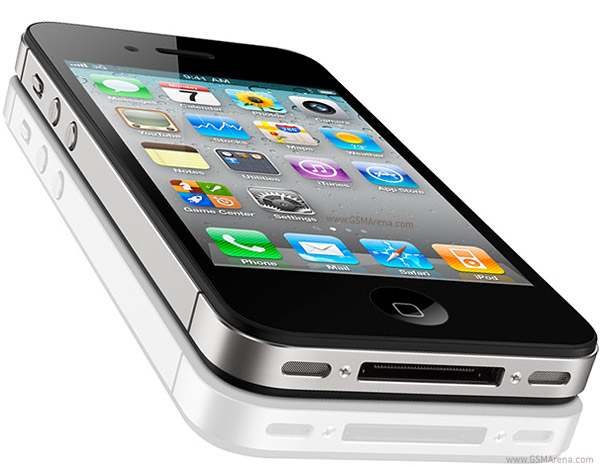
iPhone 4 features FaceTime®, which makes the dream of video calling a reality, and Apple’s stunning new Retina™ display, the highest resolution display ever built into a phone, resulting in super crisp text, images and video. iPhone 4 also features a 5 megapixel camera with LED flash, HD video recording, Apple’s A4 processor, a 3-axis gyro and up to 40 percent longer talk time—in a beautiful all-new design of glass and stainless steel that is the thinnest smartphone in the world. iPhone 4 comes with iOS 4, the newest version of the world’s most advanced mobile operating system, which includes over 100 new features. The revolutionary App Store℠ provides access to more than 250,000 apps including the new iMovie® app built just for iPhone 4.

Customers who buy their iPhone 4 at an Apple Retail Store will receive free Personal Setup service, helping them customize their new iPhone by setting up their email, loading their favorite apps from the App Store, and other tips to get up and running before they leave the store. In addition, Apple Retail Stores will host special workshops throughout the day to help customers learn more about iPhone 4. Every Apple Retail Store is staffed by a highly trained team of passionate employees who deliver innovative services like these, plus free technical support at the Genius Bar®.

Pricing & Availability
iPhone 4 will be sold in China through Apple’s retail stores for a suggested retail price of CNY4,999 for the 16GB model and CNY5,999 for 32GB model without a contract. At China Unicom stores, iPhone 4 will be available for qualified buyers with a new two year contract, sold separately. For pricing and tariff information please visit www.10010.com. The new Apple Store Hong Kong Plaza is located at 282 Huaihai Zhong Road, Shanghai. The new Apple Store Xidan Joy City is located in the Joy City shopping center at 131 North Xidan Avenue, Beijing. For more information please visit www.apple.com.cn.

iPad Wi-Fi Models Available in China on September 17

CUPERTINO, California—Apple® announced that the Wi-Fi models of its magical iPad™ will be available to customers in China from Apple Retail Stores, and select Apple Authorized Resellers, on Friday, September 17 starting at 10:00 a.m.

iPad allows users to connect with their apps and content in a more intimate, intuitive and fun way than ever before. Users can browse the web, read and send email, enjoy and share photos, watch HD videos, listen to music, play games, read ebooks and much more, all using iPad’s revolutionary Multi-Touch™ user interface. iPad Wi-Fi models are just 0.5 inches thick and weigh just 1.5 pounds—thinner and lighter than any laptop or netbook—and deliver up to 10 hours of battery life for surfing the web on Wi-Fi, watching videos or listening to music, and up to nine hours of surfing the web.*

Apple Retail Stores will offer a free Personal Setup service to every customer who buys an iPad at the store, helping them customize their new iPad by setting up their email, loading their favorite apps from the App Store℠, and more. Apple Retail Stores in China are also hosting special iPad workshops to help customers learn more about this magical new product.

Pricing & Availability
iPad Wi-Fi models in China will be available for a suggested retail price of CNY3988 for 16GB, CNY4788 for 32GB and CNY5588 for 64GB. iPad will be sold in China through Apple’s Retail Stores, and select Apple Authorized Resellers.

iPad will roll out to many more countries later this year and Apple will announce availability and local pricing for these additional countries at a later date.

For more information please visit www.apple.com.cn.

Apple’s AirPrint Wireless Printing for iPad, iPhone & iPod touch Coming to Users in November

Available First on HP ePrint Printers.

CUPERTINO, California—Apple® announced that it is releasing a beta version of its AirPrint wireless printing for iPad™, iPhone® and iPod touch® to members of Apple’s iOS developer program today, and that AirPrint will be included in the free iOS 4.2 software update in November. AirPrint automatically finds printers on local networks and can print text, photos and graphics to them wirelessly over Wi-Fi without the need to install drivers or download software. HP’s existing and upcoming ePrint enabled printers will be the first to support printing direct from iOS devices.

“AirPrint is Apple’s powerful new printing architecture that matches the simplicity of iOS—no set up, no configuration, no printer drivers and no software to download,” said Philip Schiller, Apple’s senior vice president of Worldwide Product Marketing. “iPad, iPhone and iPod touch users can simply tap to print their documents or photos wirelessly to an HP ePrint printer or to a printer shared on a Mac or PC.”

“We’re pleased to work with Apple to bring Apple’s AirPrint to our fall lineup of ePrint printers in time for the holiday shopping season,” said Vyomesh Joshi, HP executive vice president, Imaging and Printing Group. “Making it easy for our customers to print anytime, anywhere, is a key priority for HP. iPad, iPhone and iPod touch customers are going to love how easy it is to print using our new range of ePrint printers, creating high-quality printed pages in an instant.”

AirPrint is designed to support a wide range of printers from entry level inkjet printers to office laser printers. Additionally, iOS 4.2 devices can print to printers shared through a Mac® or a PC. iOS 4.2 compatible HP printers this fall include the HP Photosmart, Officejet, Officejet Pro and LaserJet Pro series ePrint enabled printers.

*AirPrint will work with iPad, iPhone 4, iPhone 3GS and iPod touch (third generation and later).

Apple designs Macs, the best personal computers in the world, along with OS X, iLife, iWork, and professional software. Apple leads the digital music revolution with its iPods and iTunes online store. Apple is reinventing the mobile phone with its revolutionary iPhone and App Store, and has recently introduced its magical iPad which is defining the future of mobile media and computing devices.