The quotes coming out of London this week had me wondering: Is Symbian's management insane? Or are they just posturing?
Here's what they said:
"The personal computer as we know it will soon be dead, replaced by rapidly growing demand for smart mobile devices, according to the head of Symbian." --IT Pro
"Mobile phone access will be the next significant Internet phenomenon." --Symbian press release
"In five years' time you'll wonder why you need a PC at all." --John Forsyth, Symbian's Head of Market Propositions (a title that apparently means something very different in the UK than it would in the US)
They sound disturbingly like some of the most enthusiastic PDA enthusiasts did in 2000. I cringed then, and I cringe now. Here's why:
A PC, at its heart, is about information creation. The keyboard, mouse or trackpad, large screen, and large memory are all there because they're needed to manipulate words and images and numbers – spreadsheets, written documents, presentations, graphics, and databases. Despite all the hoopla about browsing and games and e-mail, creating and editing information is still the core use of the PC. That's why efforts to produce smaller or cheaper PCs with fewer features have all been failures -- take out the core productivity tools, and people won't buy the product.
Mobile devices are built around a different type of usage. They're all about information and communication access while you're on the go. They deliberately compromise information creation in order to get more mobility. So they're wonderful for voice communication, nice for simple texting, and adequate for short e-mail. But every effort to use them for heavy-duty information creation has been a miserable failure.
For a smartphones to replace PCs, they would have to take on all the features of a PC -- they'd need to input and edit text as easily as a PC, create spreadsheets as easily as a PC, edit pictures and presentations as easily as a PC, and manage large databases as easily as a PC. To do that in a small mobile device, you need a color folding screen (so you can work with large documents), either a full-size keyboard or perfect voice recognition, a pointing device a heck of a lot more sophisticated than a five-way rocker, enormous amounts of storage, and a fast processor.
Oh, and you need an operating system that doesn't break its installed base of apps every time it moves to a new version.
The color folding screen is in development, sort of, but many years away. Voice recognition is getting better on PCs, but it requires a ton of processing power and memory. I like the RIM Pearl trackball, so that might work out OK for the pointing device. But the processor requirement is a killer – a fast processor means lots of power, and battery capacity is simply not up to it today. Maybe it'll happen when we get fuel cells small enough for mobiles, sometime around the end of the decade.
I think when you add up all the uncertainties, it'll be another six years at least before you see a fully functional PC replacement as small as a mobile phone (in other words, it's beyond any realistic product planning horizon today). By that time, something the size of a PC will be even more powerful, and people may well trade up to that. But even if they don't, a mobile device with all that power and feature set could easily run Microsoft Windows itself, so why does Symbian think it's going to take over? More likely Microsoft will displace Symbian, since all the most popular productivity apps already run on Windows.
No, the realistic scenario is that PCs and smartphones (and other mobile devices to come) will prosper in parallel for years, each doing its own thing increasingly well. There will be some overlap at the edges, but the core usage of each product will remain very distinct. Meanwhile, the web apps platform will continue to gradually eat away at both operating systems, transforming them into commoditized plumbing that few people care about.
I'm not sure which OS will withstand web apps commoditization longer. Windows is more vulnerable to displacement by web apps because so many PCs have reliable high-speed web access. Symbian is somewhat protected because high-speed wireless is costly and eats even more battery power, and besides the operators are interfering with the deployment of web apps in the mobile space. On the other hand, Symbian has a lot fewer loyal applications developers than Windows, and in fact the lack of Symbian apps at the recent Symbian conference was noted by some observers. A smaller applications base means less resistance to commoditization, because there are fewer apps to replace.
Overall, if I were at either Symbian or Microsoft right now, I wouldn't be bragging too much about the inevitable forces of history. Never send to know for whom the bell tolls, Symbian...
SaaS vs. Web 2.0
Here's something I wrote for the Rubicon Consulting weblog. I thought it might be of interest to folks here.
To see the rest of the article, click here.
Web 2.0, meet Software as a Service.
SaaS, meet Web 2.0.
You two need to talk. You’re working on many of the same problems, but you don’t communicate well, and sometimes it seems like each of you barely knows that the other exists.
Web 2.0, you’re certainly fun to hang out with. Your conferences are full of exciting speakers predicting amazing things, and it seems like you come up with a new and interesting product every day. You also throw great parties.
Your name is all over the place, so much so that a lot of people aren’t even sure who you are. You seem to delight in being mysterious and difficult to pin down. SaaS secretly suspects that you may be faking it, like your older brother Bubble did...
To see the rest of the article, click here.
Carnival of the Mobilists #49
49, the world's most boring number
I tried very hard to come up with a theme for this week's Carnival of the Mobilists. Unfortunately, I used up all my best carnival photos and metaphors the last time I hosted, so I had to search elsewhere...
It turns out that M49 is the Messier catalog number for an elliptical galaxy in the constellaton Virgo. Unfortunately, it's one of the most boring-looking galaxies you've ever seen, just a featureless blob.
M49 is also a five-mile-long motorway in the UK. Someone who's driven it writes, "There is nothing of interest on this motorway between the start and end. Oh dear god, I'm falling asleep just looking at the photo."
As a resident of the San Francisco Bay Area, I can also report to you that the 49ers are the local American football team. Their name is a reference to the Gold Rush miners of 1849. As for how the 49ers are doing this year, let me put it this way – you'd have more fun driving the M49.
I also checked on Wikipedia, but about the most useful information it had was that 49 is the number that comes after 48 and before 50.
So to heck with the theme and let's get down to business.
Mobilists survey. First off, I have a little announcement to make. Russell (the majordomo of the Mobilists program) and I are both curious about who's reading the Carnival. So I put together a little online survey. It's totally anonymous, and consists of about a dozen multiple choice questions that ask fun things like your favorite mobile hardware company, plus some demographics. The survey should take no more than five minutes to complete. To take it, click here. A new window should open with the survey.
And now, on with the articles...
Mobile radio. Krisse at AllAboutSymbian submitted an outstanding article on the future of radio, and the potential for Internet radio + mobile phones. It's a fascinating write-up, highly recommended.
America discovers texting. MoPocket reports on how the New York democratic party is using mobile text messaging to coordinate party activists. I have a sneaking suspicion that this is one of those articles that will make folks from other countries roll their eyes and say, "oh, those primitive Americans."
Mobile advertising. Mobhappy carried an interesting article on a new report detailing the use and effectiveness of SMS pull and push marketing. The results are enormously different from country to country.
And Always On Real Time-Access discusses the success factors for mobile advertising.
How to build a mobile phone. A newcomer to the Carnival this week is Everything and the Mobile Software Universe. Thomas submitted an article that explains the whole ecosystem for building a mobile phone. It's surprisingly complex. If you've ever wondered about the difference between an ODM, OEM, and EMS, this is a good place to start.
How to improve a mobile phone. Daniel at the Mobile Enterprise Weblog wrote about his failed attempt to use the LG Fusic and Sprint's EVDO data network to check a flight schedule. His conclusion about the phone: "It's really great if you just think of it as an EV-DO modem, because it works best in that scenario and you get much better battery life on your laptop than with the Wi-Fi radio turned on."
Tarek Speaks Mobile offers an idea for a design improvement to the Nokia E61.
Mobile culture. Xellular Identitiy has a very interesting take on the philosophical importance of the recent concert in New York in which the audience's chirping cellphones were a deliberate part of the performance. If you missed this story, the concert and Xen's comment are both interesting.
HTC + Palm = ? Another newcomer to the Carnival is Alfredo at Mobile Penguin. His submission this week discusses the status of HTC and suggests that the company should buy Palm.
Commentary, reviews, and questions. Steve at AllAboutSymbian submitted an article on finding the right balance between paper planners and mobile devices. He's found that an S60 smartphone with just a few applications is the right balance for him.
Jim at Feet Up speculates about what might or might not be announced at the upcoming Symbian Smartphone conference.
WAP Review evaluated Mob5, a web service that allows users to create a mobile-optimized personal home page.
Trent at Stockmarketbeat contends that Nokia's announcements about Wibree and licensing from Trimble Navigation were less about advancing technology than getting control.
Darla Mack asks how to export feeds and podcasts from her S60 device. Drop by and post a comment if you know how to do it.
Here's a quandry. What do you do when someone at a mobile-focused website submits an article that's very interesting but not really mobile-related? In the spirit of the Internet and openness, I think you link to it anyway – although it doesn't get to compete for Post of the Week. So here is the article from Open Gardens speculating on why some community sites grow exponentially and others don't. It's an interesting viewpoint if you're interested in the Web 2.0 thing (which you should be if you want to understand what's happening to computing).
Post of the week.
No question, it's Krisse's post on the future of radio.
Other business
As you probably know, to submit articles to the Carnival, authors send e-mails to a special Gmail address. The address gets some other mail as well, and as this week's host I felt obligated to review it. I'm pleased to announce that the Mobilists' e-mail address has won $2 million in the South African lottery. However, the Mobilist EBay account and Bank of America account have both been blocked, and we'll need to log into a special website and input our password and other personal information to clear the block. Unfortunately, there wasn't any word this week about the secret Nigerian bank account that was transferred to us a couple of months ago.
Please take the survey. Thanks for visiting, and please drop by the Mobilists survey if you haven't filled it out already. I'll write up the results next week, but if you want a sneak peek click here.
Next week the Carnival will appear at MobHappy.
I tried very hard to come up with a theme for this week's Carnival of the Mobilists. Unfortunately, I used up all my best carnival photos and metaphors the last time I hosted, so I had to search elsewhere...
It turns out that M49 is the Messier catalog number for an elliptical galaxy in the constellaton Virgo. Unfortunately, it's one of the most boring-looking galaxies you've ever seen, just a featureless blob.

M49 is also a five-mile-long motorway in the UK. Someone who's driven it writes, "There is nothing of interest on this motorway between the start and end. Oh dear god, I'm falling asleep just looking at the photo."
As a resident of the San Francisco Bay Area, I can also report to you that the 49ers are the local American football team. Their name is a reference to the Gold Rush miners of 1849. As for how the 49ers are doing this year, let me put it this way – you'd have more fun driving the M49.
I also checked on Wikipedia, but about the most useful information it had was that 49 is the number that comes after 48 and before 50.
So to heck with the theme and let's get down to business.
Mobilists survey. First off, I have a little announcement to make. Russell (the majordomo of the Mobilists program) and I are both curious about who's reading the Carnival. So I put together a little online survey. It's totally anonymous, and consists of about a dozen multiple choice questions that ask fun things like your favorite mobile hardware company, plus some demographics. The survey should take no more than five minutes to complete. To take it, click here. A new window should open with the survey.
And now, on with the articles...
Mobile radio. Krisse at AllAboutSymbian submitted an outstanding article on the future of radio, and the potential for Internet radio + mobile phones. It's a fascinating write-up, highly recommended.
America discovers texting. MoPocket reports on how the New York democratic party is using mobile text messaging to coordinate party activists. I have a sneaking suspicion that this is one of those articles that will make folks from other countries roll their eyes and say, "oh, those primitive Americans."
Mobile advertising. Mobhappy carried an interesting article on a new report detailing the use and effectiveness of SMS pull and push marketing. The results are enormously different from country to country.
And Always On Real Time-Access discusses the success factors for mobile advertising.
How to build a mobile phone. A newcomer to the Carnival this week is Everything and the Mobile Software Universe. Thomas submitted an article that explains the whole ecosystem for building a mobile phone. It's surprisingly complex. If you've ever wondered about the difference between an ODM, OEM, and EMS, this is a good place to start.
How to improve a mobile phone. Daniel at the Mobile Enterprise Weblog wrote about his failed attempt to use the LG Fusic and Sprint's EVDO data network to check a flight schedule. His conclusion about the phone: "It's really great if you just think of it as an EV-DO modem, because it works best in that scenario and you get much better battery life on your laptop than with the Wi-Fi radio turned on."
Tarek Speaks Mobile offers an idea for a design improvement to the Nokia E61.
Mobile culture. Xellular Identitiy has a very interesting take on the philosophical importance of the recent concert in New York in which the audience's chirping cellphones were a deliberate part of the performance. If you missed this story, the concert and Xen's comment are both interesting.
HTC + Palm = ? Another newcomer to the Carnival is Alfredo at Mobile Penguin. His submission this week discusses the status of HTC and suggests that the company should buy Palm.
Commentary, reviews, and questions. Steve at AllAboutSymbian submitted an article on finding the right balance between paper planners and mobile devices. He's found that an S60 smartphone with just a few applications is the right balance for him.
Jim at Feet Up speculates about what might or might not be announced at the upcoming Symbian Smartphone conference.
WAP Review evaluated Mob5, a web service that allows users to create a mobile-optimized personal home page.
Trent at Stockmarketbeat contends that Nokia's announcements about Wibree and licensing from Trimble Navigation were less about advancing technology than getting control.
Darla Mack asks how to export feeds and podcasts from her S60 device. Drop by and post a comment if you know how to do it.
Here's a quandry. What do you do when someone at a mobile-focused website submits an article that's very interesting but not really mobile-related? In the spirit of the Internet and openness, I think you link to it anyway – although it doesn't get to compete for Post of the Week. So here is the article from Open Gardens speculating on why some community sites grow exponentially and others don't. It's an interesting viewpoint if you're interested in the Web 2.0 thing (which you should be if you want to understand what's happening to computing).
Post of the week.
No question, it's Krisse's post on the future of radio.
Other business
As you probably know, to submit articles to the Carnival, authors send e-mails to a special Gmail address. The address gets some other mail as well, and as this week's host I felt obligated to review it. I'm pleased to announce that the Mobilists' e-mail address has won $2 million in the South African lottery. However, the Mobilist EBay account and Bank of America account have both been blocked, and we'll need to log into a special website and input our password and other personal information to clear the block. Unfortunately, there wasn't any word this week about the secret Nigerian bank account that was transferred to us a couple of months ago.
Please take the survey. Thanks for visiting, and please drop by the Mobilists survey if you haven't filled it out already. I'll write up the results next week, but if you want a sneak peek click here.
Next week the Carnival will appear at MobHappy.
Will Moore's Law slow down?
I spent time last week with a friend who works in the chip industry. One of the things we talked about was heat, and what it's doing to the world of processor design.
For years there have been warnings that heat dissipation was starting to become a problem for microprocessors. Five and a half years ago, Intel's CTO said, "we have a huge problem to cool these devices, given normal cooling technologies." The industry made do for another five years, which is why I've been tuning out the latest round of warnings -- I figured it was just more Chicken Little ranting. But my friend is worried that the problem is now approaching a critical point, and could have some important effects on the tech industry.
Look inside a modern PC and it's easy to spot the central processor and the graphics processor – they're the things with the big metal heat sinks on them, probably with fans on top to force air over the metal.
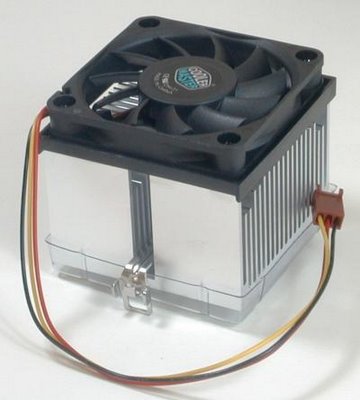
There's a limit on how big those sinks can get. Meanwhile, processor chips continue to get larger, which makes it harder to pull the heat out of them. And the metal lines on them continue to get smaller. Smaller lines are more likely to leak electricity, which heats the chip further. Already the average processor produces more heat per square inch than a steam iron, according to IBM technologist Bernie Meyerson. Extrapolate the trends into the future a bit, and things start to look ominous.
There are, of course, lots of potential ways to cope with the problem. Companies are talking about cutting the big processors into multiple small ones, which would be easier to cool (because you can put heat sinks around all the edges). Startups are proposing exotic cooling technologies like etched microchannels through which water could be circulated. My friend thinks optical computing technologies may play a role.
The thing all of these approaches have in common is that they're experimental. They might work, but they also might not. The implication is not that Moore's Law is coming to an end, but it's becoming much less reliable. Rather than getting a predictable increase in computing performance, we may end up with surges in progress that alternate with surprise periods of stagnation.
We may still be able to muddle through the whole situation; this isn't the first time people have predicted an end to Moore's Law. But it's worrisome because over the years, the assumption that Moore's Law will continue has been built into the thinking and structure of the industry. The computer hardware business depends on obsoleting its installed base on a regular basis. If that doesn't continue, sales will slow, which could force cutbacks in the R&D investment that's needed to solve the performance problems.
Instability in Moore's Law would also threaten nerd rapture, the Singularity. Creating transhuman intelligence depends on getting another 15 or 20 years of uninterrupted exponential growth in computer processing power. If that growth slows, the shipment date for our bio-cybernetic brain implants could start to slip seriously. Which would be a bummer – I've been looking forward to getting mine so I could finally understand the last episode of Twin Peaks.
For years there have been warnings that heat dissipation was starting to become a problem for microprocessors. Five and a half years ago, Intel's CTO said, "we have a huge problem to cool these devices, given normal cooling technologies." The industry made do for another five years, which is why I've been tuning out the latest round of warnings -- I figured it was just more Chicken Little ranting. But my friend is worried that the problem is now approaching a critical point, and could have some important effects on the tech industry.
Look inside a modern PC and it's easy to spot the central processor and the graphics processor – they're the things with the big metal heat sinks on them, probably with fans on top to force air over the metal.

There's a limit on how big those sinks can get. Meanwhile, processor chips continue to get larger, which makes it harder to pull the heat out of them. And the metal lines on them continue to get smaller. Smaller lines are more likely to leak electricity, which heats the chip further. Already the average processor produces more heat per square inch than a steam iron, according to IBM technologist Bernie Meyerson. Extrapolate the trends into the future a bit, and things start to look ominous.
There are, of course, lots of potential ways to cope with the problem. Companies are talking about cutting the big processors into multiple small ones, which would be easier to cool (because you can put heat sinks around all the edges). Startups are proposing exotic cooling technologies like etched microchannels through which water could be circulated. My friend thinks optical computing technologies may play a role.
The thing all of these approaches have in common is that they're experimental. They might work, but they also might not. The implication is not that Moore's Law is coming to an end, but it's becoming much less reliable. Rather than getting a predictable increase in computing performance, we may end up with surges in progress that alternate with surprise periods of stagnation.
We may still be able to muddle through the whole situation; this isn't the first time people have predicted an end to Moore's Law. But it's worrisome because over the years, the assumption that Moore's Law will continue has been built into the thinking and structure of the industry. The computer hardware business depends on obsoleting its installed base on a regular basis. If that doesn't continue, sales will slow, which could force cutbacks in the R&D investment that's needed to solve the performance problems.
Instability in Moore's Law would also threaten nerd rapture, the Singularity. Creating transhuman intelligence depends on getting another 15 or 20 years of uninterrupted exponential growth in computer processing power. If that growth slows, the shipment date for our bio-cybernetic brain implants could start to slip seriously. Which would be a bummer – I've been looking forward to getting mine so I could finally understand the last episode of Twin Peaks.
Facing reality in the mobile industry
Three mobile-related news items caught my eye today.
Welcome to the real world
The first item was the least important. Skype CEO Niklas Zennstrom talked about getting his software on mobile phones:
"When we began developing the mobile-phone version, we didn't realize the number of technical obstacles. It is challenging and is taking much longer than expected."
Well, duh. There are a couple of ways you could use Skype on a mobile phone. One is to establish an data connection via 3G and then use the data channel to make a call. The operators tend to be a tad wary of that because it basically cuts off most of their revenue.
Then there are WiFi phones. The difficulties there include dreadfully short standby battery life (because 802.11 uses much more power to maintain presence than a cellular network does) and endless difficulties handing off a call seamlessly between a WiFi network and a cellular network. (Someone in the industry once told me confidently that the solution is to pre-emptively establish a connection to the cellular network anytime the user gets close to the edge of the WiFi network. Problem: you're almost always at the edge of the WiFi network unless you're sitting on the transmitter. So basically your phone will almost always be making two calls at once.) Pairing to the diversity of WiFi base stations out there is also a lot tougher than many people realize. Plus many of the operators don't want mixed WiFi/mobile devices to succeed because they weaken the operators' control.
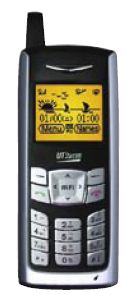
Oh, and the first WiFi phones are butt-ugly.
The tech industry is excited about WiFi mobile phones because it wants somebody to make the operators disappear. I'm fine with that, and I like Skype (I'm a user). But you've got to differentiate between the technologies you want to be real and the ones that actually are.
My guess is that, especially in the US, we'll see WiFi phones sell in volume first as cordless phones in the home, where you don't expect to roam and a lot of people already have WiFi base stations. I could maybe picture them on college campuses, which often have very broad WiFi networks and a lot of students anxious to make cheap calls. In Europe, there is more possibility for dual cellular/WiFi phones because they can be sold aftermarket, bypassing the operators. But you still have to deal with the handoff and pairing issues.
If you want to replace a mobile phone for the mass market, you have to come pretty close to the usability and mobility of today's mobile phones. That will be very, very, very hard to achieve with WiFi.
Tragic but not surprising
I'm seeing almost no coverage of this in the US tech press, but Benq announced that it's closing down the mobile phone business that it acquired from Siemens, just one year and 29 days after the deal closed. At the time of the deal, the combined companies were the fourth largest mobile phone company in the world.
Siemens once had huge ambitions in mobile phones, but it never seemed to find a clear market identity. It was one of the few mobile phone companies to license Series 60 from Nokia (a disaster), and it launched a very aggressive campaign to create a line of fashion designer phones (another disaster).
Outside of Germany (where the Siemens brand is very well respected) the company was mostly known as a supplier of low-cost mobile phones. When Nokia decided to take back market share by leveraging its high production volumes to cut prices, Siemens went into a death spiral from which it never recovered. The mobile phone unit was already in deep financial trouble when Siemens sold it, and in fact they basically paid Benq 250 million euros to take the business off their hands. (Benq had to assume some of the contract liabilities to Siemens' German work force, and supposedly agreed not to do layoffs in the Siemens mobile phone business for one year.)
Apparently the Siemens mobile business continued to decline in the year after the deal, and the press release from Benq was amazingly blunt:
"Both revenue and margin development will fall far short of expectations in the important Christmas quarter. [Mike's translation: The operators refuse to sell our stuff; that's how we know in September that we're going to have a bad Christmas]. Due to the discontinuation of further financial support from the parent company, BenQ [Translation: We have thrown too much money into this thing already], and the resulting lack of liquidity and implicated disruption to business [our mobile division is flat out of cash], BenQ Mobile in Germany will file for insolvency at the local court in Munich within the next few days [We're laying off everyone, selling the buildings they work in, and stiffing as many creditors as we can. But we'll keep using the Siemens-Benq brand for another four years, because we get to do that under the terms of our deal.]"
The situation is sad for the former Siemens employees, and sad for Benq's ambitions. A year ago the phone ODMs (manufacturers who don't sell under their own names) were supposedly about to turn themselves into the masters of the mobile phone industry, with Benq leading the way. Now Nokia, SonyEricsson, and Motorola are all on the rebound.
I'll close with comments by Richard Windsor, a very brainy investment analyst with Nomura in London:
"BenQ has effectively signalled the end of its mobile phone business.... Handset delays, testing and acceptance problems have prevented devices getting to market on time which has proved catastrophic for revenues, profits and cash flow.... There can be little doubt that this is the end of the road for BenQ's ambitions to become a branded handset manufacturer.... We expect that Nokia will get the lion's share of BenQ's business as BenQ has remained mostly in the low end where Nokia is by far the strongest.... Negative for Symbian as yet another licensee appears to have gone up in smoke, dealing its credibility as an impendent software vendor a blow. Negative for the Linux consortium as BenQ's long-term feature phone roadmap looked like it was heading towards Linux and the consortium is now deprived of a credible member."
Not sure if it's tragic, but it's ominous
The other sad but not surprising end was the abrupt discontinuation of Mobile ESPN, the MVNO focused on sports fans. (An MVNO is a mobile phone operator that buys air time from one of the big operators, pairs it with specialized phones and services, and sells the bundle to the public.) I thought Mobile ESPN's phone interface had huge flaws, but most observers are attributing the failure to bad marketing or just a general failure of the MVNO concept.
A lot of nasty rumors had been circulating about Mobile ESPN, which is why the shutdown was not surprising. At CTIA earlier this month I spoke with one well-connected industry insider who was furious about the situation. He said it's unreasonable to expect a new MVNO to find its market immediately.
He had a point. I strongly believe in the idea of MVNOs, because they enable an operator to focus on vertical solutions for vertical markets, which is the way most mobile data usage will develop. I think Mobile ESPN was poorly implemented. But other MVNOs are more promising (Helio remains my favorite example). I hope they'll be given enough time to prove themselves.
A year ago MVNOs were supposed to be the next big thing in the operator world. Now many people are trashing them. This is typical of the faddish, short-term behavior of the mobile industry. When you have no vision of your own, you jump on whatever idea is trendy at the moment. MMS. WAP. And now MVNOs. The industry often behaves like a flock of birds – it doesn't really matter where you go, as long as you don't get separated from the others.
Welcome to the real world
The first item was the least important. Skype CEO Niklas Zennstrom talked about getting his software on mobile phones:
"When we began developing the mobile-phone version, we didn't realize the number of technical obstacles. It is challenging and is taking much longer than expected."
Well, duh. There are a couple of ways you could use Skype on a mobile phone. One is to establish an data connection via 3G and then use the data channel to make a call. The operators tend to be a tad wary of that because it basically cuts off most of their revenue.
Then there are WiFi phones. The difficulties there include dreadfully short standby battery life (because 802.11 uses much more power to maintain presence than a cellular network does) and endless difficulties handing off a call seamlessly between a WiFi network and a cellular network. (Someone in the industry once told me confidently that the solution is to pre-emptively establish a connection to the cellular network anytime the user gets close to the edge of the WiFi network. Problem: you're almost always at the edge of the WiFi network unless you're sitting on the transmitter. So basically your phone will almost always be making two calls at once.) Pairing to the diversity of WiFi base stations out there is also a lot tougher than many people realize. Plus many of the operators don't want mixed WiFi/mobile devices to succeed because they weaken the operators' control.
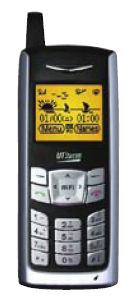
Oh, and the first WiFi phones are butt-ugly.
The tech industry is excited about WiFi mobile phones because it wants somebody to make the operators disappear. I'm fine with that, and I like Skype (I'm a user). But you've got to differentiate between the technologies you want to be real and the ones that actually are.
My guess is that, especially in the US, we'll see WiFi phones sell in volume first as cordless phones in the home, where you don't expect to roam and a lot of people already have WiFi base stations. I could maybe picture them on college campuses, which often have very broad WiFi networks and a lot of students anxious to make cheap calls. In Europe, there is more possibility for dual cellular/WiFi phones because they can be sold aftermarket, bypassing the operators. But you still have to deal with the handoff and pairing issues.
If you want to replace a mobile phone for the mass market, you have to come pretty close to the usability and mobility of today's mobile phones. That will be very, very, very hard to achieve with WiFi.
Tragic but not surprising
I'm seeing almost no coverage of this in the US tech press, but Benq announced that it's closing down the mobile phone business that it acquired from Siemens, just one year and 29 days after the deal closed. At the time of the deal, the combined companies were the fourth largest mobile phone company in the world.
Siemens once had huge ambitions in mobile phones, but it never seemed to find a clear market identity. It was one of the few mobile phone companies to license Series 60 from Nokia (a disaster), and it launched a very aggressive campaign to create a line of fashion designer phones (another disaster).
Outside of Germany (where the Siemens brand is very well respected) the company was mostly known as a supplier of low-cost mobile phones. When Nokia decided to take back market share by leveraging its high production volumes to cut prices, Siemens went into a death spiral from which it never recovered. The mobile phone unit was already in deep financial trouble when Siemens sold it, and in fact they basically paid Benq 250 million euros to take the business off their hands. (Benq had to assume some of the contract liabilities to Siemens' German work force, and supposedly agreed not to do layoffs in the Siemens mobile phone business for one year.)
Apparently the Siemens mobile business continued to decline in the year after the deal, and the press release from Benq was amazingly blunt:
"Both revenue and margin development will fall far short of expectations in the important Christmas quarter. [Mike's translation: The operators refuse to sell our stuff; that's how we know in September that we're going to have a bad Christmas]. Due to the discontinuation of further financial support from the parent company, BenQ [Translation: We have thrown too much money into this thing already], and the resulting lack of liquidity and implicated disruption to business [our mobile division is flat out of cash], BenQ Mobile in Germany will file for insolvency at the local court in Munich within the next few days [We're laying off everyone, selling the buildings they work in, and stiffing as many creditors as we can. But we'll keep using the Siemens-Benq brand for another four years, because we get to do that under the terms of our deal.]"
The situation is sad for the former Siemens employees, and sad for Benq's ambitions. A year ago the phone ODMs (manufacturers who don't sell under their own names) were supposedly about to turn themselves into the masters of the mobile phone industry, with Benq leading the way. Now Nokia, SonyEricsson, and Motorola are all on the rebound.
I'll close with comments by Richard Windsor, a very brainy investment analyst with Nomura in London:
"BenQ has effectively signalled the end of its mobile phone business.... Handset delays, testing and acceptance problems have prevented devices getting to market on time which has proved catastrophic for revenues, profits and cash flow.... There can be little doubt that this is the end of the road for BenQ's ambitions to become a branded handset manufacturer.... We expect that Nokia will get the lion's share of BenQ's business as BenQ has remained mostly in the low end where Nokia is by far the strongest.... Negative for Symbian as yet another licensee appears to have gone up in smoke, dealing its credibility as an impendent software vendor a blow. Negative for the Linux consortium as BenQ's long-term feature phone roadmap looked like it was heading towards Linux and the consortium is now deprived of a credible member."
Not sure if it's tragic, but it's ominous
The other sad but not surprising end was the abrupt discontinuation of Mobile ESPN, the MVNO focused on sports fans. (An MVNO is a mobile phone operator that buys air time from one of the big operators, pairs it with specialized phones and services, and sells the bundle to the public.) I thought Mobile ESPN's phone interface had huge flaws, but most observers are attributing the failure to bad marketing or just a general failure of the MVNO concept.
A lot of nasty rumors had been circulating about Mobile ESPN, which is why the shutdown was not surprising. At CTIA earlier this month I spoke with one well-connected industry insider who was furious about the situation. He said it's unreasonable to expect a new MVNO to find its market immediately.
He had a point. I strongly believe in the idea of MVNOs, because they enable an operator to focus on vertical solutions for vertical markets, which is the way most mobile data usage will develop. I think Mobile ESPN was poorly implemented. But other MVNOs are more promising (Helio remains my favorite example). I hope they'll be given enough time to prove themselves.
A year ago MVNOs were supposed to be the next big thing in the operator world. Now many people are trashing them. This is typical of the faddish, short-term behavior of the mobile industry. When you have no vision of your own, you jump on whatever idea is trendy at the moment. MMS. WAP. And now MVNOs. The industry often behaves like a flock of birds – it doesn't really matter where you go, as long as you don't get separated from the others.
Understanding the full impact of the web
I wrote an article for the newsletter of my employer, Rubicon Consulting. Thought it might be of interest to some folks here.
This will probably sound crazy, but despite all the hype about Web 2.0 and web startups, the most common mistake we see tech companies making with regard to the web is underestimating its long-term impact on their businesses...
Click here for the full article.
==========
By the way, I owe thank-yous to the last two Carnival of the Mobilists hosts:
Mobile Gadgeteer has some interesting coverage of CTIA, several other cool articles, and also named my article on the RIM Pearl the post of the week. Thanks, Matt!
And the carnival at Mobile Crunch, from the week before, had some CTIA coverage plus a lot of other interesting articles. Sorry I missed linking to you last week, Oliver.
This will probably sound crazy, but despite all the hype about Web 2.0 and web startups, the most common mistake we see tech companies making with regard to the web is underestimating its long-term impact on their businesses...
Click here for the full article.
==========
By the way, I owe thank-yous to the last two Carnival of the Mobilists hosts:
Mobile Gadgeteer has some interesting coverage of CTIA, several other cool articles, and also named my article on the RIM Pearl the post of the week. Thanks, Matt!
And the carnival at Mobile Crunch, from the week before, had some CTIA coverage plus a lot of other interesting articles. Sorry I missed linking to you last week, Oliver.
RIM's Pearl: Splendid hardware, unfinished software
For me, the highlight of fall CTIA this year was that I finally got to play with a Pearl, RIM's latest smartphone. It has more media features, plus a miniscule trackball above the keypad for navigation. The trackball is about the size of a pea, and at first glance I thought it would be too small to be usable. But I was very surprised when I tried it. The trackball works very well. It's fast, so you can zip up, down, and sideways very quickly by sliding your thumb. But it doesn't feel loose or out of control. To select something, you click in on the trackball, which was also more intuitive than I expected. When the interface is structured properly, you get into a nice rhythm of roll, click, roll, all without taking your thumb off the trackball.
I especially liked using the trackball for tasks like setting up an appointment. RIM's thumbwheel-optimized interface translates well to the trackball in this case. The program lists a series of variables (start time, end time, date, etc). You navigate up and down this list by rolling the trackball, click to select an item you want to change, and then roll up or down (or sideways) to make the numbers go up and down. It's extremely intuitive, and you can enter complex information pretty darned quickly.
(I'd love to see a music player with a trackball to navigate the playlists. If the software was structured properly, I think it would be easier and more intuitive than the iPod.)
Browsing with the trackball was uncomfortable, largely because the browser didn't show any signs of being reworked for the trackball. I think browsing works best when you have an onscreen pointer that lets you click on things, and the trackball would be ideal for this. But RIM hasn't implemented a pointer in its browser – instead you just move from selection point to point serially, the same as you would with a rocker or a thumbwheel. This was a disappointing missed opportunity.
Lesson to hardware manufacturers – the user interface and pointing device need to be designed together. An interface that's easy for one pointing device is often uncomfortable for another.
The other part of browsing that I hated was entering URL's using RIM's special QWERTY keypad. If you haven't seen this keypad, it arranges the letters in QWERTY format, with two or three letters per key, so the phone can be the width of a regular mobile phone. As you press the keys, the phone is supposed to decode what you're trying to write. This works okay for commonly used words, but stinks for URLs because they are unfamiliar. Also, the keys are so tiny and flat that it was hard to hit them accurately with my big thumbs.
I finally got frustrated and put the phone in multitap mode (where you press twice for the second letter).
I've heard that with training the recognition gets better, and you get used to using the keyboard. Maybe – Graffiti on Palm had a learning curve too, and millions of people put up with that.
I'm also skeptical about the Pearl's market focus. It's being marketed as a media + email phone, for people who want both RIM-powered email and multimedia entertainment. RIM's core users are mid-career business professionals, and I'm not sure how many of them want to be entertained by their phones. Meanwhile, the people who most want mobile entertainment -- those under age 25 -- are not all that interested in professional e-mail. It's hard to picture an entertainment-focused MVNO like Helio marketing the Pearl. Especially since Pearl doesn't have 3G support.
But multimedia aside, the saving grace of the Pearl is its size. It's both lightweight (3.1 ounces / 88 grams) and thin (.57 inches / 14.5mm). That's .1 inches / 3mm thicker than a Moto Slvr, but it's much thinner and lighter than any previous RIM device. I think it's the first RIM product that looks at first glance just like a modern cellphone. If RIM marketed it as a thinner RIM device, and updated the software to take advantage of the trackball, I think it would be a winner.
Because of the multimedia emphasis and the unmodified software, I'm not sure how well the phone will sell. But I really hope we haven't seen the last of the trackball in mobile devices. It's a substantial improvement.
I especially liked using the trackball for tasks like setting up an appointment. RIM's thumbwheel-optimized interface translates well to the trackball in this case. The program lists a series of variables (start time, end time, date, etc). You navigate up and down this list by rolling the trackball, click to select an item you want to change, and then roll up or down (or sideways) to make the numbers go up and down. It's extremely intuitive, and you can enter complex information pretty darned quickly.
(I'd love to see a music player with a trackball to navigate the playlists. If the software was structured properly, I think it would be easier and more intuitive than the iPod.)
Browsing with the trackball was uncomfortable, largely because the browser didn't show any signs of being reworked for the trackball. I think browsing works best when you have an onscreen pointer that lets you click on things, and the trackball would be ideal for this. But RIM hasn't implemented a pointer in its browser – instead you just move from selection point to point serially, the same as you would with a rocker or a thumbwheel. This was a disappointing missed opportunity.
Lesson to hardware manufacturers – the user interface and pointing device need to be designed together. An interface that's easy for one pointing device is often uncomfortable for another.
The other part of browsing that I hated was entering URL's using RIM's special QWERTY keypad. If you haven't seen this keypad, it arranges the letters in QWERTY format, with two or three letters per key, so the phone can be the width of a regular mobile phone. As you press the keys, the phone is supposed to decode what you're trying to write. This works okay for commonly used words, but stinks for URLs because they are unfamiliar. Also, the keys are so tiny and flat that it was hard to hit them accurately with my big thumbs.
I finally got frustrated and put the phone in multitap mode (where you press twice for the second letter).
I've heard that with training the recognition gets better, and you get used to using the keyboard. Maybe – Graffiti on Palm had a learning curve too, and millions of people put up with that.
I'm also skeptical about the Pearl's market focus. It's being marketed as a media + email phone, for people who want both RIM-powered email and multimedia entertainment. RIM's core users are mid-career business professionals, and I'm not sure how many of them want to be entertained by their phones. Meanwhile, the people who most want mobile entertainment -- those under age 25 -- are not all that interested in professional e-mail. It's hard to picture an entertainment-focused MVNO like Helio marketing the Pearl. Especially since Pearl doesn't have 3G support.
But multimedia aside, the saving grace of the Pearl is its size. It's both lightweight (3.1 ounces / 88 grams) and thin (.57 inches / 14.5mm). That's .1 inches / 3mm thicker than a Moto Slvr, but it's much thinner and lighter than any previous RIM device. I think it's the first RIM product that looks at first glance just like a modern cellphone. If RIM marketed it as a thinner RIM device, and updated the software to take advantage of the trackball, I think it would be a winner.
Because of the multimedia emphasis and the unmodified software, I'm not sure how well the phone will sell. But I really hope we haven't seen the last of the trackball in mobile devices. It's a substantial improvement.
Subscribe to:
Posts (Atom)